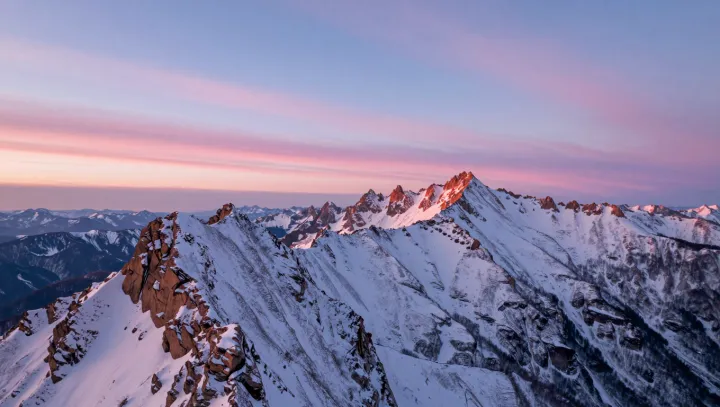

That soft sand underfoot is not humble at all. It is the final product of a long geological supply chain in which mountain ranges act as the original quarries, and plate tectonics, weathering and erosion do the grinding work grain by grain.
At the start stands hard crystalline rock. Granite, basalt, sandstone. Exposed at the surface, it is attacked by mechanical weathering and chemical weathering, processes that exploit every fracture, mineral boundary and ion exchange site until blocks become pebbles and pebbles become grit.
More decisive than any single storm is repetition. Freeze–thaw cycles widen cracks, root wedging pries slabs apart, and hydrolysis weakens feldspar into clay, leaving resilient quartz behind as tiny, durable fragments that will dominate many future beaches.
From there, rivers act as conveyor belts. They abrade, sort and winnow particles by grain size and density, a kind of natural hydrodynamic screening that rounds sharp edges and strips away unstable minerals long before the surviving sand reaches coasts or inland basins.
Desert dunes add another filter. Wind transport, or aeolian transport in the textbook phrase, bounces grains in endless saltation, chipping off corners and burning away fines, so that what finally slips between toes is the concentrated, polished residue of vanished mountains.