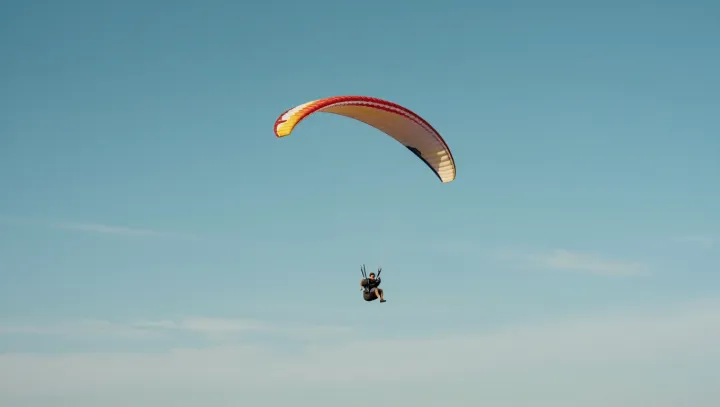
Invisible air, not jagged rock, decides who comes home. That is the blunt claim repeated in elite paragliding circles, where the most respected pilots speak less about courage and more about method. For them, the peak skill is not a last‑second turn from a cliff, but the slow, almost pedantic reading of pressure, humidity, lapse rate and wind shear before a wing ever leaves the ground.
Safety, they argue, is engineered hours earlier in the quiet phase, when pilots cross‑check synoptic charts against local topography and run mental models of convective instability. A violent collapse in flight looks spectacular, yet it usually traces back to a simple error in assessing thermal strength, boundary‑layer height or convergence lines. The so‑called daredevils spend long minutes watching dust, smoke, birds and cloud bases, treating each as a data point in a private field experiment.
The paradox is stark. The more a pilot behaves like a cautious scientist, the more dramatic the flight can appear to onlookers. High‑level competitions reward those who can interpret micro‑scale turbulence and macroscopic airflow as if reading code, applying concepts like orographic lift and adiabatic cooling with the same discipline an engineer brings to a stress test. What outsiders label fearlessness is often just rigorous respect for air that cannot be seen, only inferred.