
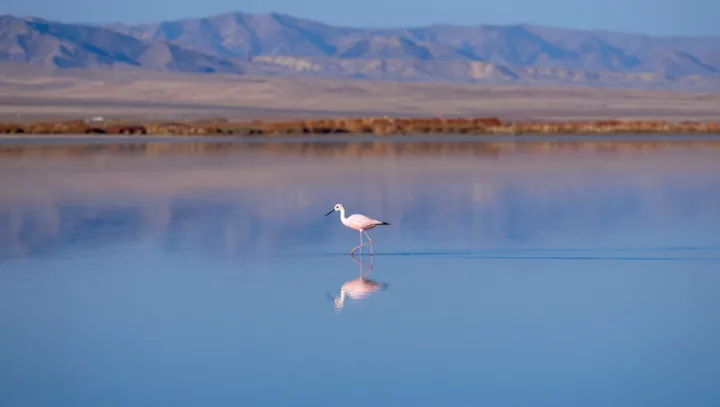
Color, in flamingos, is not a birthright. It is a diet report. Freshly hatched chicks are gray, their down built from standard keratin with almost no visible pigment, a kind of biological default setting that looks more like ash than the iconic pink seen on postcards.
What repaints them is chemistry. Tiny crustaceans and filamentous algae carry carotenoids, the same fat‑soluble pigments that give carrots and some flowers their hue, and these molecules are absorbed in the gut, processed in the liver through enzymatic oxidation, then shuttled through the bloodstream bound to lipoproteins toward growing feathers. Each molt, each new barb and barbule, locks more of these modified carotenoids into place, turning neutral plumage into a saturated display that functions as a social signal of foraging success and physiological condition inside colonies.
So the pink flock is, quite literally, a moving archive of wetland productivity and pigment biochemistry, stamped onto feathers that began as nothing more than gray.