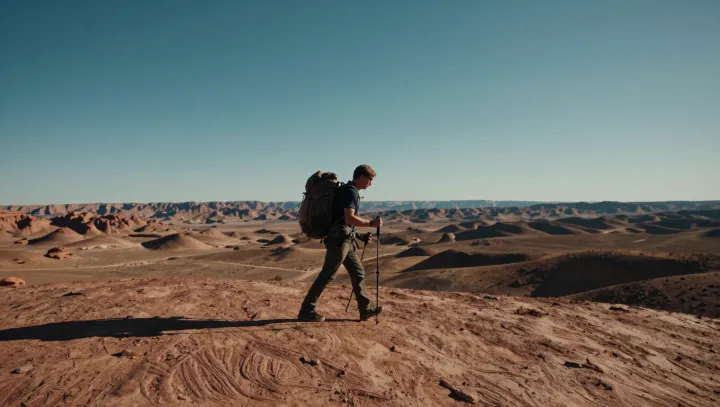
Less gear often means more safety. That sounds backwards to newcomers who stack gadgets, backup layers and tools into packs that creep past 20 kg, yet incident reports on major trails repeatedly feature overloaded hikers who quit early or need assistance. Ultra-light walkers, carrying under 10 kg including food and water, reduce mechanical stress on joints, cut metabolic demand per kilometer, and shorten exposure windows on exposed ridges or storm-prone passes.
The heavy pack is not protection. It is a risk multiplier. Biomechanics research shows that each extra kilogram sharply increases ground reaction forces on knees and ankles, raising rates of overuse injury and acute falls on descents. With a lighter base weight, hikers maintain a more stable gait, preserve proprioception as fatigue builds, and keep core temperature regulation steadier because the body is not overproducing heat under constant load. Fewer injuries mean fewer unplanned stops, which in turn means less time benighted above tree line or stalled in bad weather.
Ultra-light kits are not minimalist for style. They are lean systems designed around risk management and redundancy by function, not by object count. A single synthetic layer that dries fast under evaporative cooling can replace multiple cotton backups that stay wet and heavy. A smaller shelter that pitches quickly can be deployed before hypothermia sets in, rather than after a long, fumbling setup with cold hands. By cutting nonessential items, experienced hikers free cognitive bandwidth for route finding, weather pattern reading and hydration planning, the tasks that actually keep them alive when the trail stops being friendly.