
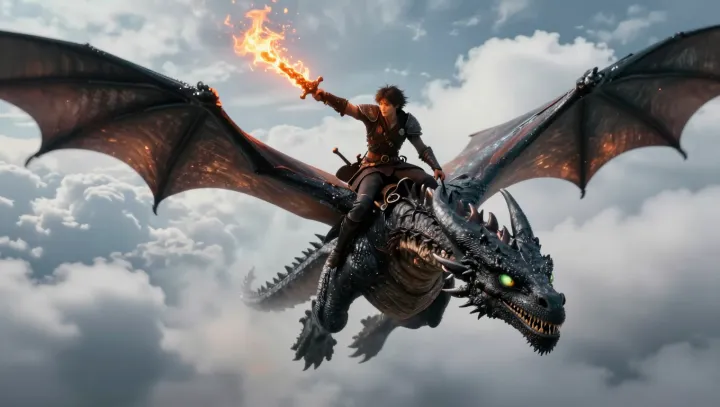
A dragon on a screen should be harmless to the psyche; the science says it is not. Functional MRI studies of parasocial bonds show that invented companions can recruit medial prefrontal cortex and temporoparietal junction, the same circuitry used to infer real people’s thoughts. When a boy reaches for a dragon’s snout in a cinema, viewers’ mirror neurons and oxytocin pathways often fire as if an animal were physically present, writing that bond into neural tissue.
The unsettling part is that fiction does not stay put in the theater. Experimental work on narrative transportation finds that people who report stronger immersion in stories about non‑existent beings later show measurable increases in empathic concern for strangers. Activity in the default mode network, which supports mental simulation and autobiographical memory, appears to integrate those invented relationships into a person’s social graph, so the boy and his dragon quietly sit beside family and friends in the brain’s accounting.
This suggests that a film’s emotional punch is less about dragons than about neural efficiency. Brains are prediction engines; once a creature’s motives are modeled with enough detail, the machinery for attachment comes online with minimal skepticism. The boy’s loneliness, the dragon’s vulnerability, the near‑loss and reunion scenes provide dense training data, and the empathy circuitry generalizes that practice to the next tired barista or frightened child encountered outside the theater, long after the credits vanish.