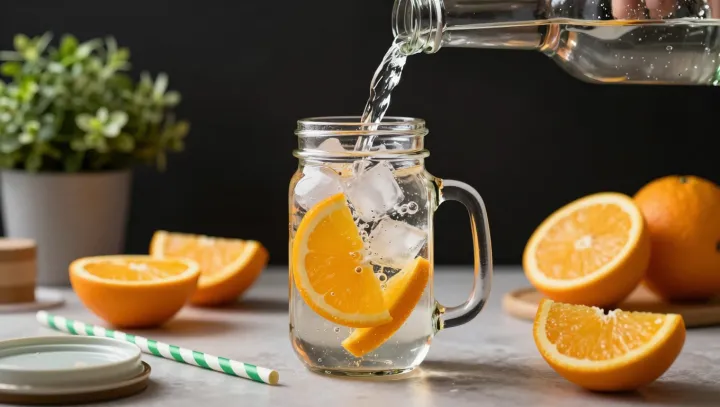
That second pitcher of fruit infused water is mostly theater. By the time you refill the jug, diffusion has already done its job, pulling out a large share of water soluble vitamins like vitamin C and several B vitamins into the first batch. What remains inside the tired slices is locked behind cell walls that have already leaked their easiest cargo.
The real issue is not flavor, it is gradient. Once the concentration gradient between fruit cells and water has flattened, passive diffusion and osmosis slow to a crawl, so extra soaking adds minutes, not micronutrients. Vitamin C, which is chemically unstable in water, also degrades through oxidation, especially when exposed to air and light at the surface of that carafe.
Taste lingers longer than nutrition, which misleads many drinkers. Aromatic compounds that drive smell persist at lower concentrations than vitamins and can keep signaling freshness to the nose even as antioxidant capacity, measured by assays such as ORAC and total phenolic content, has dropped sharply. At that point the colorful slices are props, and the water is mostly just scented.