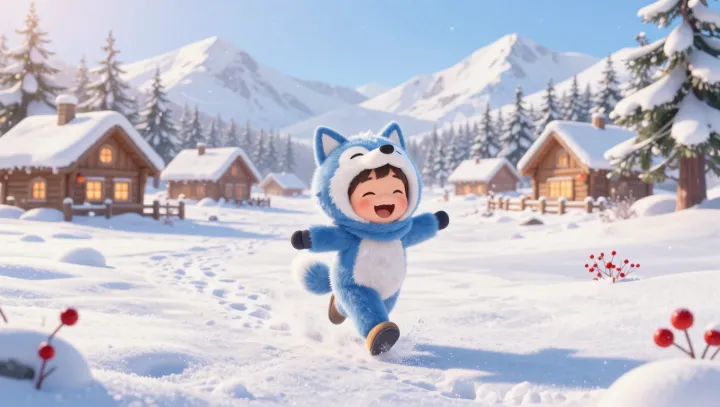
Fresh snow, not a bedroom, steals the role of stress reset in this scene. Ten seconds of wild running in a wolf costume sound trivial, yet neuroendocrine systems treat that burst as a serious input. Cold air hits facial thermoreceptors, muscles contract, lungs pull sharp breaths, and the autonomic nervous system flips into a brief sympathetic surge.
The counterintuitive part is that this spike is exactly what primes recovery. After the sprint, baroreflex activity and vagal tone start to rebound, and heart rate variability often rises in patterns similar to those seen after consolidated slow‑wave sleep, when parasympathetic dominance is strongest. Cortisol secretion, driven by the hypothalamic–pituitary–adrenal axis, can dip as feedback loops sense that the threat was short, bounded, and successfully handled.
Play makes that physiology even more efficient. Because the child reads the sprint as fun, prefrontal circuits reframe arousal as safe, which dampens amygdala alarm signals and accelerates cortisol normalization. No dreams, no hours in darkness. Just a silly costume, bright snow, and a nervous system convinced, for a moment, that everything demanding has ended.