
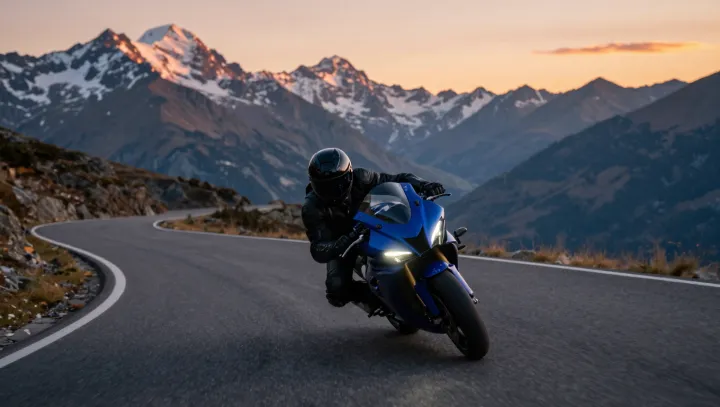
A thin strip of rubber now decides what used to be decided by fear. On a modern road‑legal sportbike, lean angle is no longer just a question of bravery; it is a problem continuously solved by control theory and silicon. Wheel‑speed sensors, inertial measurement units and throttle‑by‑wire feed an electronic control unit that samples data in millisecond windows and compares slip to pre‑mapped friction models.
The unsettling truth is that the rider’s senses are too slow. Human reaction time lives in fractions of a second, while traction control and cornering ABS intervene dozens of times before a brain fully registers a slide. Algorithms trim ignition timing, modulate fuel injection and meter brake pressure so that small, rapid tire slips are treated as signal, not catastrophe, allowing the tire to work near the peak of the friction curve even on cold, patched mountain asphalt.
What looks like reckless lean is actually moderated risk. The chassis geometry, radial tires and compliant suspension still set the mechanical envelope, but the bike’s electronic “nervous system” closes the loop between grip and power delivery. Fear and feel have not vanished; they are simply no longer the primary safety net when rubber brushes the edge of the road and the edge of physics.