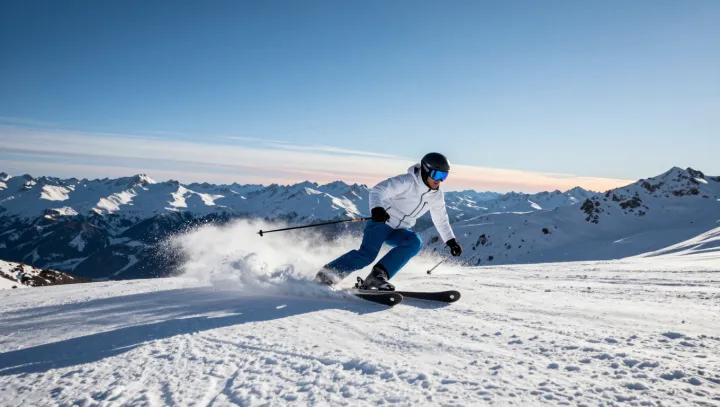
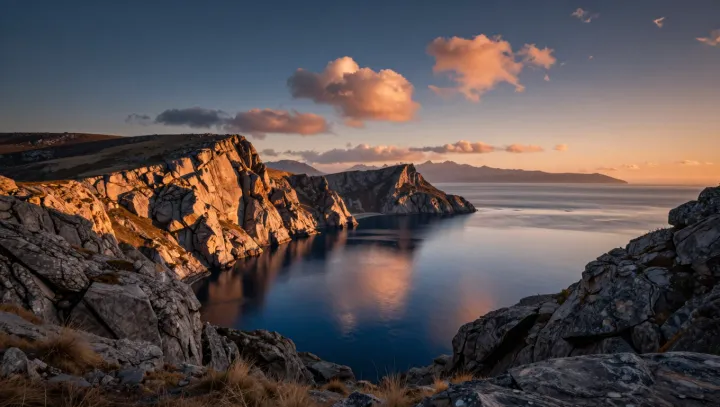
Stillness is a lie. A ridge that looks carved in stone is riding a violent swing in light intensity, scattering, and air structure as the sun drops toward the horizon.
The blunt truth is that physics races faster than your eye admits. As solar elevation sinks by a tiny angle, Rayleigh scattering spikes the blue loss, Mie scattering fattens reds and oranges, and the direct beam slices through a longer optical path that multiplies aerosols and water vapor effects. In those few degrees of descent, photon flux can plunge by orders of magnitude, yet the silhouettes look fixed, so the brain anchors on shape and underestimates change.
Color is even less honest. Human cone cells saturate under strong glare, then abruptly hand the scene to rod cells as luminance falls, triggering shifts in white balance and contrast that feel emotional but are just photoreceptor physiology trying to keep up. Meanwhile, thermal gradients over rock and water reorganize within minutes; air density stratifies, refractive index fluctuates, and small pockets of turbulence bend light enough to soften edges, erase distant detail, or briefly sharpen a far shore before it fades again.
Calm water cheats you, too. A mirror-flat surface is not stable; it is reprogramming reflections as incident angles change, swapping bright specular glare for diffuse glow and then for near-black when the sun slips just out of view. To a casual glance, mountains, sky, and water seem frozen in a postcard. To optics and physiology, they are a rapid sequence of different scenes that only masquerade as one.