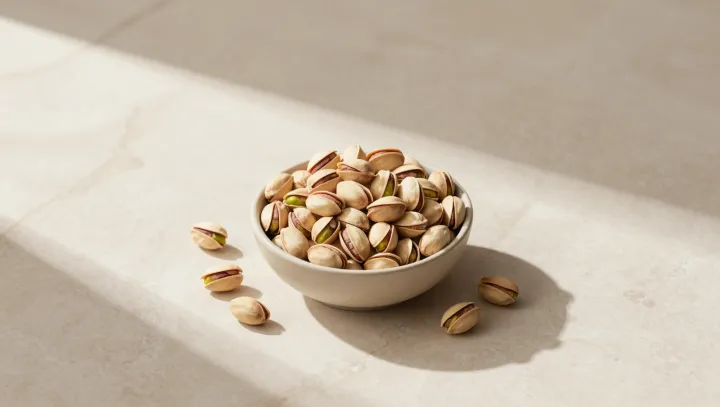
Scarcity here is not an accident; it is the product. Salt-dusted shells once piled in plastic bowls now appear in matte pouches, in limited flavors, in carefully rationed serving sizes that signal rarity rather than volume. The nut itself has not changed much, but everything around it has been rebuilt to turn a bar filler into a quasi-luxury signal.
The odd truth is that pistachios now trade less on taste than on semiotics. Pack design borrows the visual grammar of cosmetics and high-end athleisure, while price anchoring nudges buyers to read the higher unit cost as proof of purity, traceability and nutritional density. Marketing leans on protein counts, unsaturated fat ratios and antioxidant claims, folding basic lipid biochemistry into a broader promise of self-optimization that makes a handful of nuts feel like a micro-upgrade of the body.
Status, not satiety, drives the premium. Influencer posts frame pistachios beside pilates mats and minimalist kitchen counters, converting a commodity crop into a portable emblem of discipline, taste and environmental conscience. Brands restrict new flavors, seed waitlists and talk up supply constraints, importing the scarcity playbook of streetwear and luxury watches into the snack aisle, until consumers are paying less for pistachios and more for the story that surrounds them.