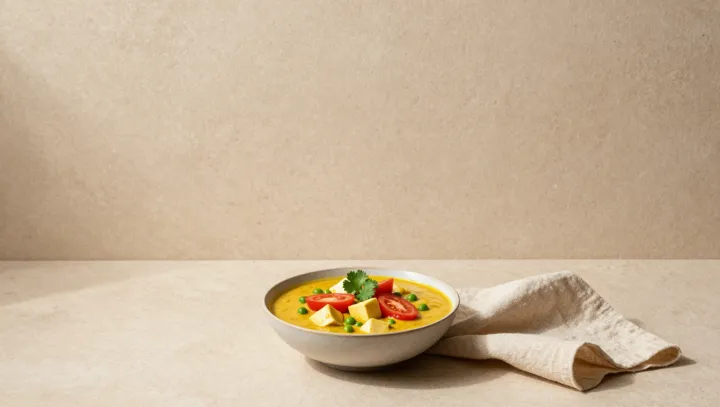
One curry-style tofu bowl looks modest on the plate, yet it can stand toe to toe with a meat-heavy dinner on protein while undercutting it on saturated fat. A standard portion of firm tofu, around a typical block half, supplies roughly twenty grams of protein, once coconut milk, chickpeas or lentils join the pot, the total climbs into the range many people expect only from steak or burgers.
The real surprise sits in the fat profile. A meat-centric plate built on fatty cuts often brings high saturated fat, which drives low density lipoprotein cholesterol and atherosclerotic risk. Swap in tofu simmered in spices with canola or olive oil, and most of the fat shifts toward mono and polyunsaturated forms, while total saturated fat can fall to a small fraction of the usual load, even when a moderate splash of coconut milk is used for flavor rather than bulk.
Stronger still is the efficiency of that protein. Soy protein offers a complete essential amino acid spectrum, so muscle protein synthesis and nitrogen balance do not depend on animal flesh. Layer the bowl over brown rice and vegetables, and fiber, magnesium and phytochemicals join the equation, nutrients almost absent from meat-heavy dinners. The dish looks simple. Metabolically, it behaves like a quiet rebuke to the idea that serious protein must arrive with a side of saturated fat.