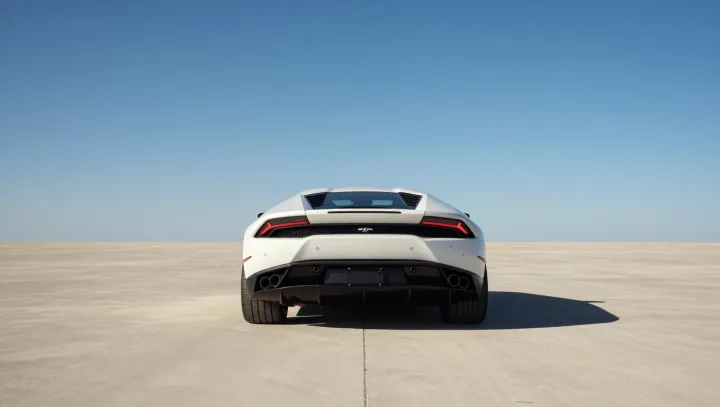
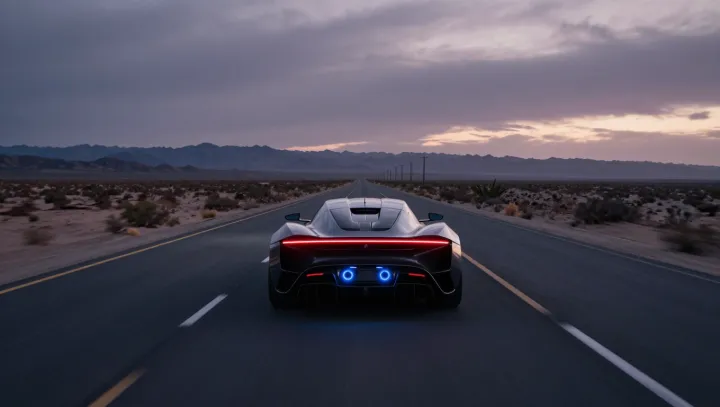
No ornament, the rear wing tells the story. Rising from the P1's tail, it can pitch steeply under braking, presenting a broad surface to the wind and adding aerodynamic drag. Yet that air-brake posture is only the visible act; its sharper purpose is to recut the car's airflow when tyre grip is under strain.
The cleverness lies elsewhere. By altering its angle of attack, the wing changes the pressure differential between its upper and lower surfaces, increasing downforce as load transfer and cornering demand press the tyres hardest. Air is not merely blocked. It is persuaded: flow attachment across the wing and rear bodywork can preserve a cleaner wake, while the altered pressure field pushes the chassis toward the road. In a vehicle built around active aerodynamics, this is not a bolt-on trick but a coordinated control surface, balancing drag against traction, stability, and braking confidence.
That distinction matters more than spectacle. An air brake spends speed; adaptive wing geometry spends air, directing it where mechanical grip alone begins to bargain. The P1 therefore treats the rear wing less as a billboard of performance than as a moving argument between drag and downforce. That choreography does not repeal physics; it makes the trade-off legible at the edge of adhesion. At the limit, the blade rises, the pressure shifts, and the road seems to meet the car halfway.