
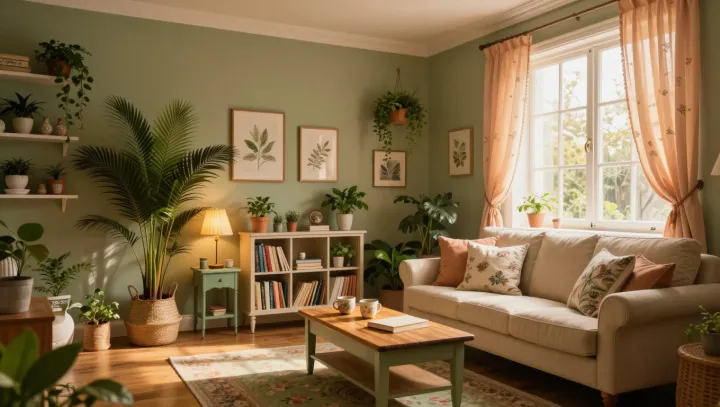
Morning light does more than a shelf of vines. You can feel it when a pale beam crosses oak, catches a woven shade, and leaves one fern at the room's edge rather than crowding every surface. Less can read truer. The eye gets a legible sequence: light, grain, fiber, leaf, and open space.
Biophilic design is not a leaf-count contest. Your visual system uses grouping, contrast, and depth cues to decide whether a room feels settled; when pots repeat without hierarchy, they can erase the pauses that make materials readable. Daylight matters more. Through circadian entrainment, changing light can cue alertness and rest, while wood grain and layered textiles supply variation without demanding constant attention. Attention restoration theory also suggests that softly ordered settings can reduce mental fatigue; a wall of pots may do the opposite. That is why one well-sited plant can carry more weight than twenty scattered ones.
Start with the room, not the nursery. Put plants where they answer an existing cue: a window's changing light, a timber table's linear grain, or a rough ceramic surface that needs a softer counterpoint. Then leave breathing room. You are designing attention, not stockpiling chlorophyll. A restrained room can feel alive because its signals agree. Would you rather count leaves, or let the space make its case?