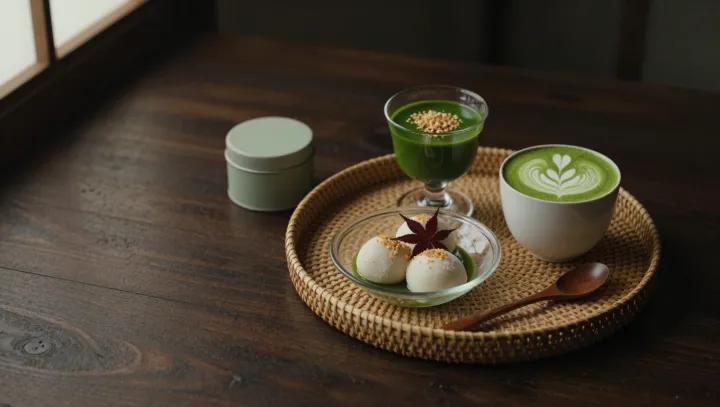
The green dust hits cream first. On a spoon, matcha looks almost too vegetal for pastry, yet its apparent contradiction is precisely the point: pulverized leaves send chlorophyll, catechins, caffeine, and L-theanine into the mixture at once, rather than filtering the experience through a brewed liquid. Nothing arrives alone.
The grassy note is not a flaw. Chlorophyll and leaf-derived volatiles announce plant matter with an insistence that sugar cannot erase; catechins add bitterness and astringency, tightening the palate much as tannins do in tea. Then comes the reversal. Because matcha is a suspension of finely milled leaf particles, fats in milk, butter, or white chocolate can coat those particles and soften their rough edges, while L-theanine lends an umami-like roundness. The mouth reads contrast.
That tension is the dessert's real engine. Caffeine contributes its own bitterness, though at culinary levels it is one voice among several, and the powder's small particle size disperses flavor broadly through mousse, ice cream, or sponge. Creaminess, then, is partly fat and texture, not a magical property of the tea. It is chemistry, then appetite. A pale green slice can taste like a field after rain, then finish with the hush of custard: leaf and luxury refusing to cancel each other.