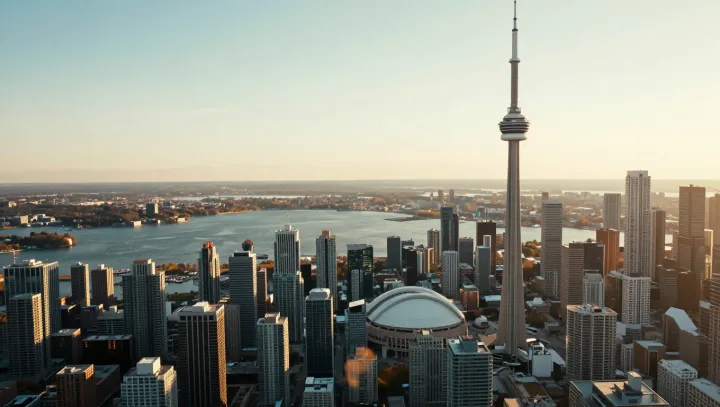
At the edge of dusk, Toronto's towers appear to switch on twice: first in circuitry, then in perception, when the sky loses luminance faster than offices lose their output. The city is not suddenly spending more electricity. Contrast takes command.
The brighter-looking city is, in fact, a visual bargain. As twilight deepens, background luminance falls sharply while interior lamps and office fixtures maintain a comparatively stable output, increasing Weber contrast between each window and the sky behind it. Physics does the selling. Under photopic and mesopic vision, the eye recalibrates as ambient light recedes, making repeated grids of illuminated windows read as cleaner, sharper, and more forceful than they did under daylight.
That makes the skyline less a triumph of extra illumination than of timing. Glass, concrete, and steel merely hold their positions while atmospheric scattering drains color and brightness from the upper air. Then the windows claim the frame. For a brief interval, the city seems to outshine itself, though nothing has changed except the darkness that permits it to be seen.