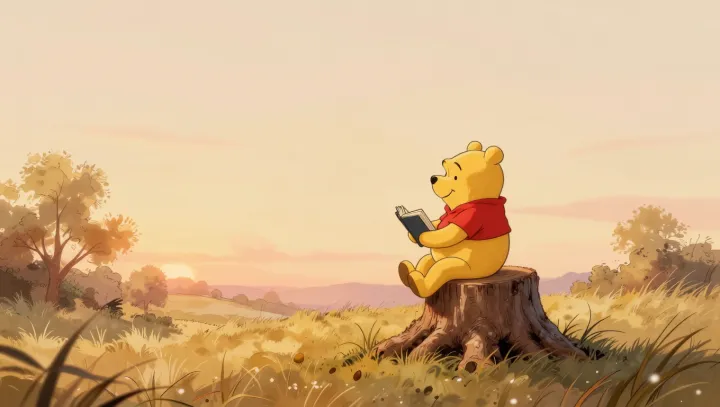
Honey clings to his paw. Winnie-the-Pooh pauses at the cupboard, not because the story expects improvement, but because appetite, muddle, and delay are allowed to remain visible. That permission matters. Rather than turning weakness into a lesson, the scene treats it as ordinary weather inside friendship, where care arrives before correction.
The deeper trick is emotional, not childish. Attachment theory calls this co-regulation: distress eases when a trusted other receives a person without making belonging conditional on performance, while affect regulation can resume because shame has not seized the room. No repair bill arrives. In clinical terms, acceptance does not deny a problem; it lowers defensive arousal, which makes reflection less threatening than it is under criticism. Pooh's friends notice his hunger, forgetfulness, and fears; they also keep inviting him along. The books refuse the familiar bargain in which affection is payment for self-improvement.
That refusal has teeth. Much storytelling makes growth a transaction, yet Pooh offers a less glamorous social contract: change can occur, but no one must earn a seat at the table first. It feels rare. Friendship here is not a clinic or a scorecard, but a place where the unfinished self can breathe without being made into a project. Honey still sticks to the paw; the hand is simply not left alone.