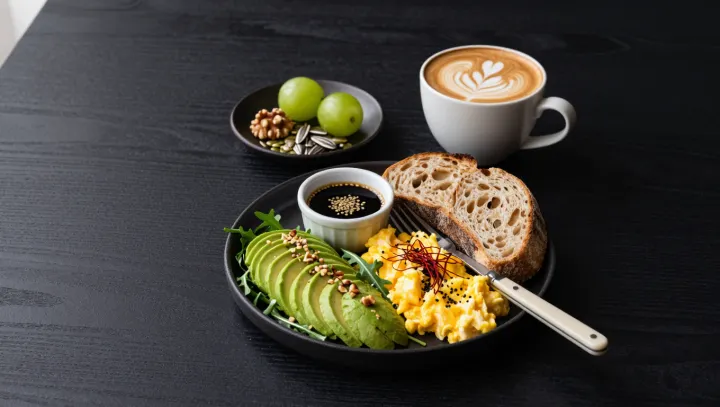
Avocado toast wins. The cut yolk sliding over mashed avocado carries fat, protein, and fiber into the gut, where their slower handling changes the morning equation; a sweet pastry can deliver more speed, but little endurance after the first burst of energy. Sugar rushes ahead. The difference is not magic.
Calories are the wrong scoreboard. Dietary fat and protein slow gastric emptying, while fiber adds bulk and can reduce the rate at which nutrients reach the small intestine; together, they tend to extend physical fullness. Satiety signals persist. Fat and protein also stimulate cholecystokinin, or CCK, and nutrients reaching the lower gut can support glucagon-like peptide-1, or GLP-1, both of which help report that a meal has arrived. A sugary breakfast, often rich in refined carbohydrates, is absorbed quickly and can produce a sharper glucose rise followed by insulin release; with less fiber and protein, it offers fewer brakes on returning hunger.
It is meal software. Satiety signaling, shaped by gastric emptying and enteroendocrine hormones, works like a background process that meters fuel instead of dumping it into the system at once. The calories are not erased. An avocado-and-egg meal may contain more energy than a frosted cereal bowl, yet its protein, unsaturated fat, and fiber can make that energy arrive on a slower schedule. As food design learns to pace absorption rather than merely count energy, breakfast becomes an engineering question: how long can a meal postpone appetite's refill request?