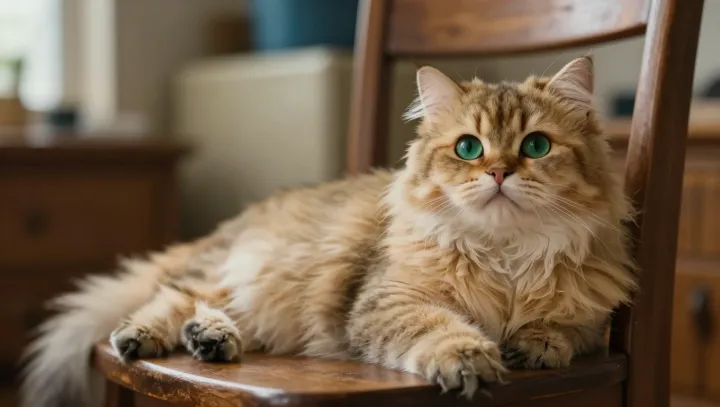
That pose is not laziness. Beneath the apparent spill of fur, a cat's vertebral column bends with an amplitude that makes a settled body look poured rather than placed, while its clavicles sit within muscle instead of locking the shoulder girdle to a breastbone. The frame cheats your eye.
Collarbones supply the trick. Because feline clavicles are reduced and not joined to the sternum by a rigid bony strut, the shoulders can draw inward as the animal threads an opening narrower than its torso; scapular motion and spinal flexion share the work. The skull sets limits. If a cat's head clears a gap, the rest of the body often follows, though fur and posture can make that passage seem less plausible than it is.
Calling it flexibility undersells it. In biomechanics, this is a compact system of mobile vertebrae, elastic soft tissue, and a shoulder girdle freed from the stiff crossbar found in many mammals, allowing compression without the awkwardness such a maneuver would impose on a human body. Nothing is magical. Yet a cat at rest, folded into a narrow shelf or flowing beneath a door-sized void, leaves the old distinction between solid body and liquid gesture oddly unresolved.