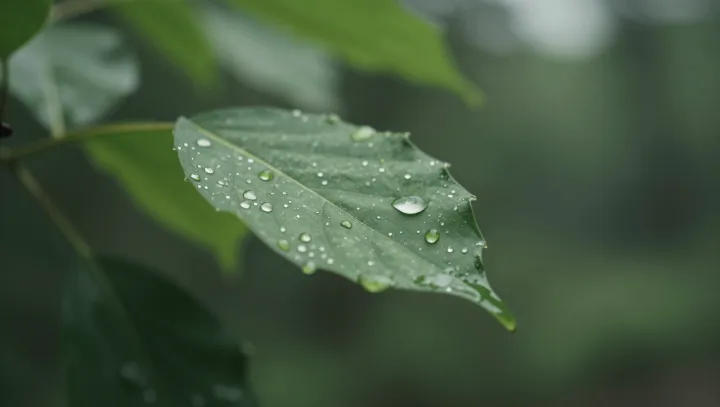
A dewdrop is not poetic decoration; it is strict geometry in liquid form. Surface tension pulls water into a near‑perfect sphere, and that sphere behaves as a convex lens, bending incoming rays by refraction and projecting an inverted image of the leaf or flower behind it. The tiny radius produces a very short focal length, which is why the scene inside looks compressed and startlingly sharp when you hit it with enough magnification.
Good dewdrop photos are less about luck than about ruthless control of focus. Autofocus usually fails. Switch to manual, lock your macro lens close to its minimum focusing distance, then rock your body a few millimeters until the refracted image inside the droplet snaps into contrast. Depth of field at this scale is razor thin because of geometric optics, so stopping down the aperture slightly buys you just enough sharpness without drowning the background in clutter.
Light, not equipment price, decides whether the physics actually shows. Backlight or strong sidelight sends a clean beam through the sphere, raising micro‑contrast in the upside‑down scene and hinting at internal reflection along the droplet edge. Angle matters even more. Shift a fraction and the internal image jumps or vanishes because the effective object distance changes. Work low, align the flower or leaf directly behind the drop, and use a dark, distant background so the glowing, crystal‑clear world inside the droplet is the only thing that feels real.