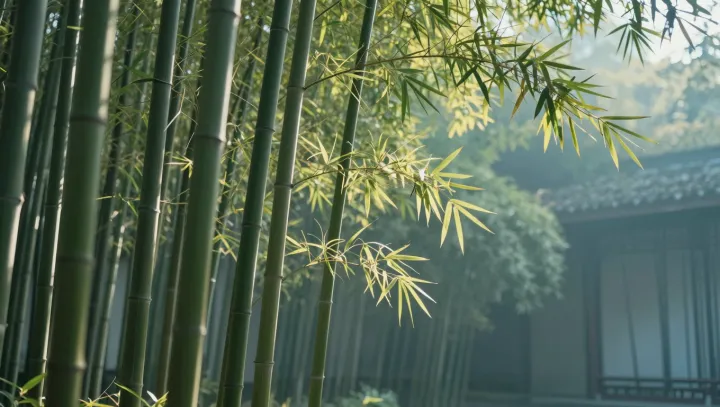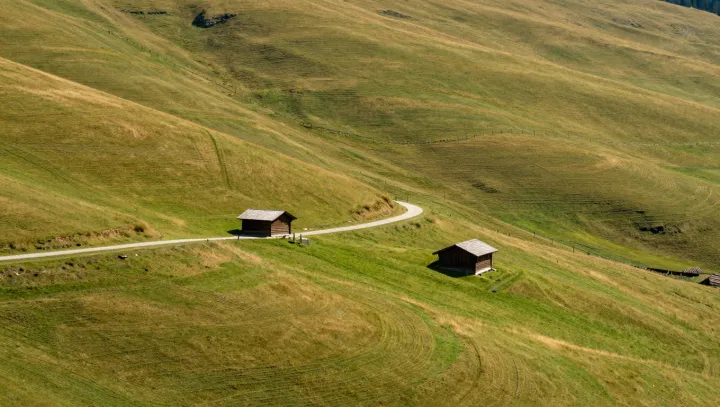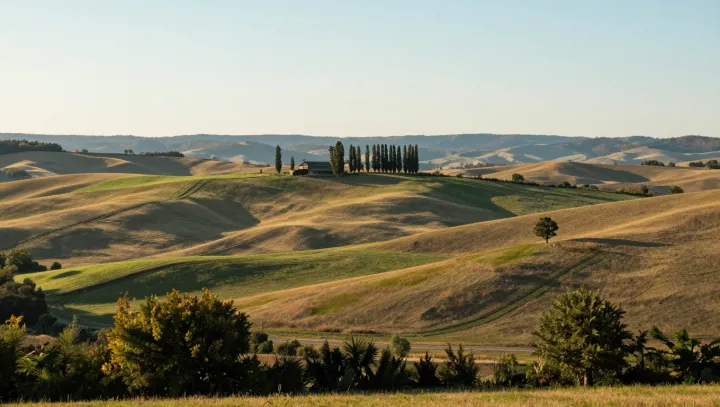
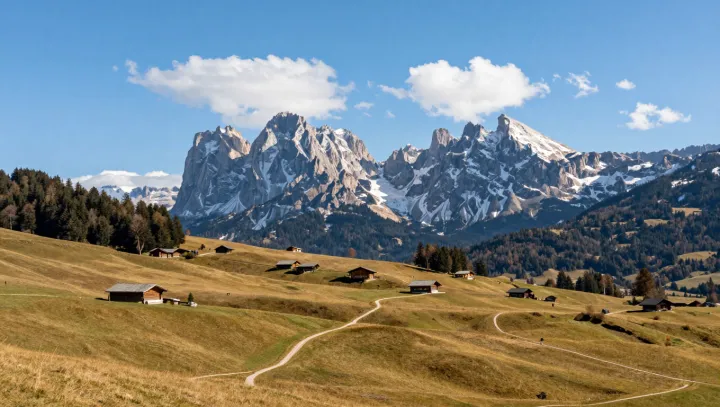
Italy’s green is not innocent charm; it is engineered restraint. Across hills where stone terraces interrupt the slopes, pasture rotation and transhumance still frame how soil is used, controlling stocking density so that roots stay deep and erosion stays low, a quiet continuity from pre-industrial herding to current agri-environment schemes that pay farmers to keep fields open instead of paved.
The climate alone would not save it. Short, intense rain events in a Mediterranean regime could strip bare hills in a decade, yet the mix of perennial grasses, olive groves and hedgerows works like distributed infrastructure for water retention and evapotranspiration, moderating runoff and fire risk while sustaining a mosaic of semi-natural habitats that conservation biologists classify as high-value cultural grassland rather than simple farmland.
Most decisive is policy, not nostalgia. Zoning rules, protected area networks and Common Agricultural Policy cross-compliance together create a de facto green belt where building permits are scarce, subsidies reward low-intensity grazing and abandonment is discouraged, so that the postcard view survives not as scenery but as an actively regulated land-use system whose maintenance costs are baked into national and European budgets.