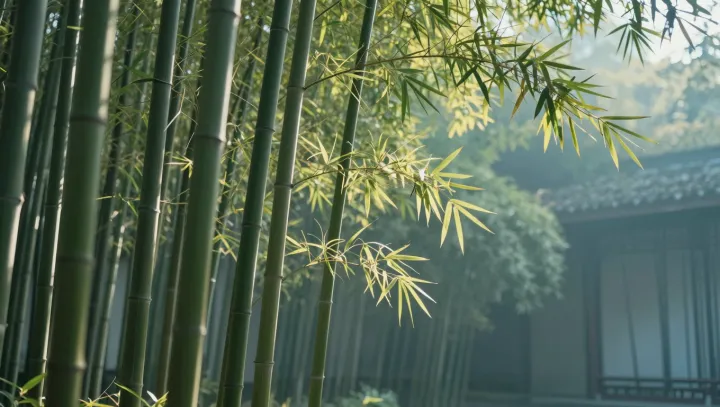
Bamboo looks fragile; in East Asia it carries some of the toughest moral expectations. Its hollow stem is read not as lack, but as a demand for inner emptiness, a mind cleared of ego so learning and ritual can flow. Classical Confucian texts praise modest receptivity, and the plant’s open core becomes a diagram of that ethical ideal, a kind of living cross‑section of humility.
More provocative is the way softness becomes strength. Bamboo fibers distribute stress along longitudinal vascular bundles, so the culm bends under wind yet rarely snaps. That mechanical behavior maps neatly onto Confucian and Daoist advice: yield in the short term, preserve integrity in the long term. Moral rectitude here is not granite; it is elastic resistance, a character that absorbs pressure without internal fracture.
Linked to this ethic is a quiet promise of duration. Bamboo grows in segmented nodes, regenerates rapidly from rhizomes, and stays green through seasonal extremes; those botanical facts fed metaphors of unbroken life, calm through hardship, and social continuity. Poets, monks, and scholar‑officials settled on the same verdict: better to live like a hollow stalk that survives the storm than like a rigid branch that dies proving a point.