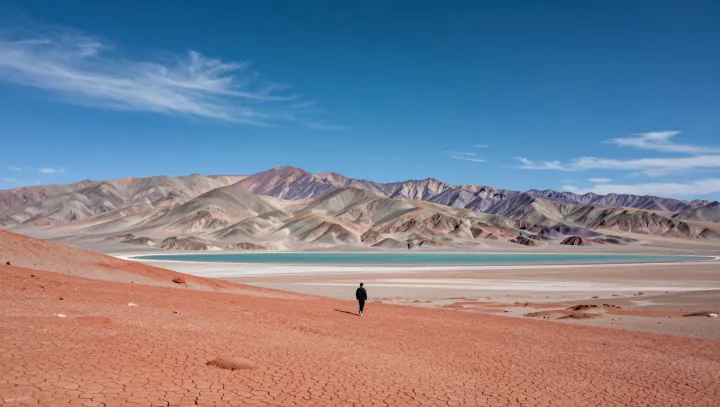
Brutal sunlight hits Lhasa, yet the city quietly refuses real summer. Under that bright sky, high-altitude physics rewrites the script of heat, turning what looks like a furnace into something closer to a cool laboratory experiment.
The key claim is simple: intensity of light is not the same as intensity of heat. At more than three thousand meters, thinner air lets more shortwave solar radiation punch through, so streets feel sharply lit and ultraviolet levels spike, but the same rarefied, low-pressure air cannot store energy well, limiting sensible heat and keeping average air temperature modest by lowland standards.
Equally counterintuitive is how fast that heat disappears. With low humidity and a dry adiabatic lapse rate working in the background, the air cools rapidly once the sun dips, longwave radiative cooling from the surface racing ahead because there is little water vapor to trap it. The result is a large diurnal temperature range, warm afternoons flipping into sweater weather nights that break any sustained heat build-up.
What feels almost like a climatic loophole is really a tight physical balance. Strong insolation, thin air, low specific heat capacity of the atmosphere and scant latent heat from evaporation combine to deliver bright, high-altitude days without the heavy, lingering thermal mass that defines lowland summers.