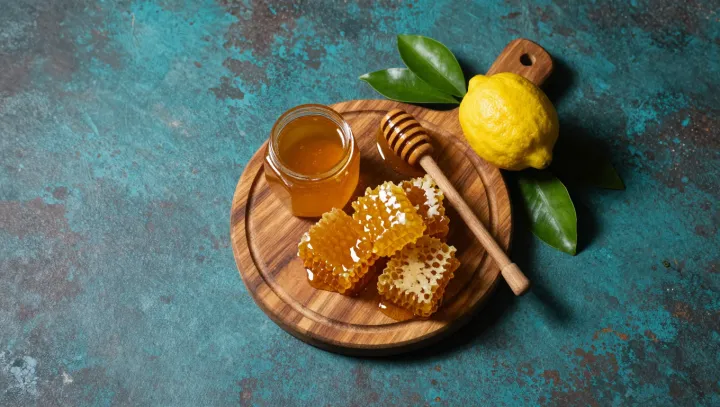
Honey cheats decay. Sealed in clay jars beside sarcophagi, the same sticky mass has sat for ages without collapsing into mold or sour sludge, a performance no bread, meat, or fruit can match in similar conditions.
Behind that stubborn stability stands chemistry, not myth. Honey has extremely low water activity, so its sugars bind available water molecules and leave bacteria and fungi effectively desiccated. Its natural acidity, with a pH often near that of black coffee, keeps many pathogens metabolically dormant. Add to this the enzyme glucose oxidase, introduced by bees, which slowly produces hydrogen peroxide in dilute solutions and creates a mild antimicrobial bath whenever honey is slightly diluted by ambient moisture or human use.
Oddly, this apparent immortality depends on vulnerability. Once honey absorbs enough environmental moisture or is cut with other foods, its osmotic pressure drops, yeasts can ferment, and the quiet microbial stalemate ends. Yet inside a sealed tomb jar, shielded from humidity and air, those physical and biochemical safeguards hold, turning a simple insect product into one of the rare foods that behaves almost like an inert mineral on the shelf.