
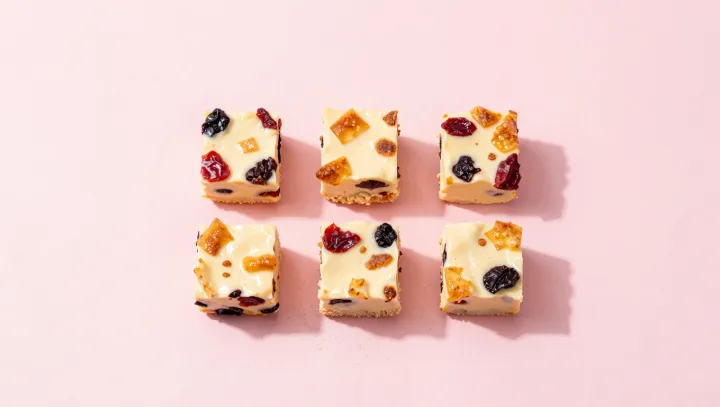
Soft sameness is the real surprise here. Nougat and marshmallow look, chew, and melt in ways your tongue files under the same category, yet their internal engineering could not be more different. Nougat is built on whipped egg white, a protein foam that sets into a fine-stranded network. Marshmallow, by contrast, leans on gelatin and sometimes starch, a polysaccharide-protein gel that behaves more like a hydrated sponge than a solid.
The key is not the recipe, it is the architecture of trapped air. Tiny gas cells, stabilized either by denatured albumin in nougat or gelatin helices in marshmallow, dominate what food physicists call rheology. Those cells decide how fast your teeth sink in, how quickly sugar dissolves into saliva, and how much elastic rebound your jaw feels after each bite. Change bubble size or volume fraction and the candy shifts from bouncy to rubbery, no matter which molecules build the walls.
Chew feel, then, is a negotiated truce between structure and dissolution. Protein networks in nougat tend to fracture into small crumbs that smear quickly, while the gel matrix in marshmallow deforms more continuously, yet both deliver a similar time profile of compression, spring, and melt. Your oral mechanoreceptors respond mainly to that sequence, not to the chemistry behind it, which is why the dense bar and the fluffy cube end up masquerading as textural cousins.