
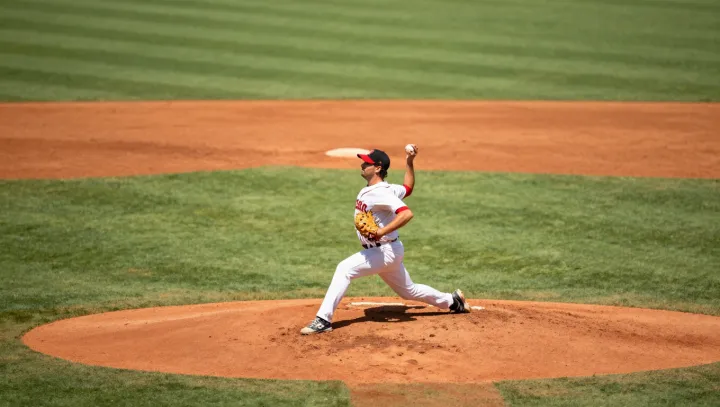
Stillness beats violence at the plate. The quiet posture before the pitch, the almost static hands, carry more competitive value than the loud, televised swing that follows, because the body’s starting geometry dictates everything that can happen after release.
Elite hitters treat stance as non‑negotiable infrastructure. Joint alignment, center of mass control, and hip-shoulder separation set the kinematic chain before the ball even leaves the pitcher’s hand, so a stable base shortens the time from visual input to motor output and widens the margin for late adjustments on high‑velocity fastballs or sharp breaking balls.
The more uncomfortable truth is that power is cheap and decisions are scarce. Bat speed can be manufactured in the weight room, but pitch recognition and temporal prediction rely on visual cortex processing and oculomotor control, trained through thousands of quiet reps tracking spin, release height, and trajectory without swinging, which refines strike‑zone mapping and suppresses impulsive chases.
Timing work completes this invisible architecture. By rehearsing leg kicks, toe taps, and load sequences against variable pitch speeds, hitters calibrate their internal model of time—what motor learning researchers call temporal coupling—so the barrel arrives on plane when the ball enters the optimal contact window, turning a merely strong swing into a reliably productive one.