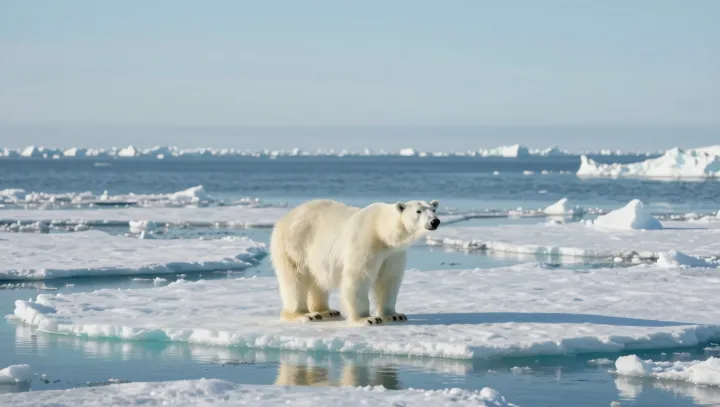
Vanishing ice, not empty seas, is killing the Arctic’s top hunter. The ocean below still holds seals, fish, plankton in dense biological layers, yet the predator built to rule this system is slipping into energy debt.
This is a design mismatch. Polar bears evolved as specialists in sea ice ecology, turning a frozen platform into a hunting device. Their olfactory system can detect a seal through almost a meter of snow, and their adipose tissue acts as a long‑term energy reservoir. But the key interface is the ice edge, where seals surface to breathe and rest. As Arctic amplification accelerates, that platform fractures, retreats, and melts earlier each season, shrinking the window in which bears can convert seal blubber into stored calories.
The paradox is stark. More open water can even boost primary productivity and support abundant prey, yet the predator cannot leverage that surplus. Bears are not built for long‑distance aquatic pursuit or efficient terrestrial foraging; their biomechanics and basal metabolic rate are tuned to ambush hunting from stable ice. When ice breaks up, they must swim farther, burn glycogen faster, and tap fat reserves sooner, pushing many past the threshold where reproduction and survival remain viable.
What looks like a food shortage is really a platform shortage. On a sea still rich with life, the failure of frozen infrastructure alone is enough to starve the hunter that once defined this ecosystem.