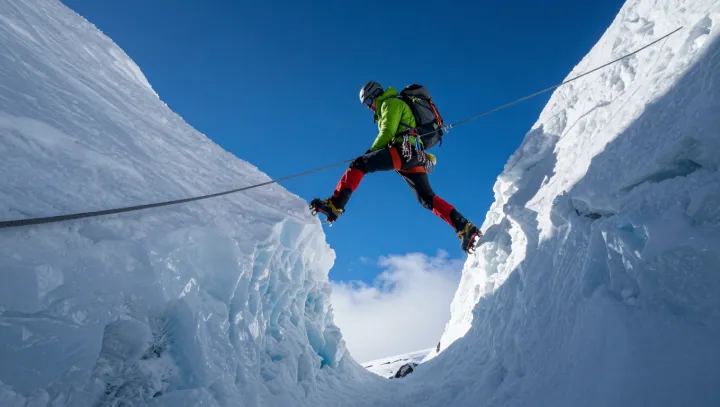
Air at six thousand meters does not welcome you. It strips pressure, strips oxygen, strips heat, and does so with an efficiency that makes the word unprepared sound polite. Without insulated boots and a proper shell, tissue meets ambient physics: barometric pressure drops, partial pressure of oxygen falls, and hemoglobin simply cannot saturate.
The harsher truth is that every step without gear is a small experiment in organ failure. Hypoxia slows cerebral perfusion, reaction time stretches, judgment bends. Cold air drives peripheral vasoconstriction; blood is shunted away from fingers and toes, setting up frostbite and, with sustained exposure, deep tissue necrosis. A missed crampon or ice axe is not a comfort issue; it is a direct hit on balance and on the body’s ability to generate metabolic heat through controlled movement.
Even vision is under siege. Unshielded eyes face ultraviolet radiation that, amplified by snow reflection, can burn the cornea into snow blindness, turning descent into a groping hazard. Breathing unfiltered, frigid air inflames airways and compromises gas exchange across the alveolar membrane. On such peaks, gear is not accessory. It is the only thin, engineered argument your body has against an environment that is, at every interface, trying to shut it down.