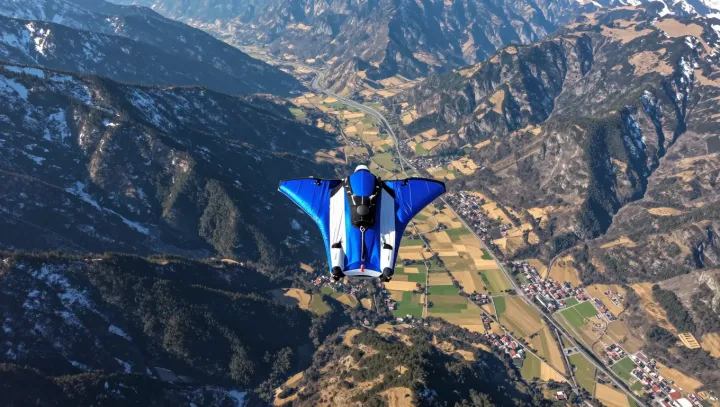
Cold numbers argue that human flight is not a triumph but a filter. A wingsuit tracks through air on stable equations of lift, drag, and glide ratio, yet those same equations demand unforgiving precision when the pilot is only a few meters from granite at highway speed.
The harsh truth is that wingsuit flying concentrates risk instead of spreading it. Climbing Everest exposes a body to hypoxia, frostbite, and fatigue, but most errors accumulate slowly, with multiple points for retreat, rescue, or assisted descent. In contrast, a wingsuit jump compresses the entire hazard profile into seconds of high kinetic energy and razor thin margins for reaction time, where a misjudged line, a microburst, or a delayed flare converts clean airflow into terminal impact.
What really keeps the fatal fraction high is not ignorance of physics but overconfidence in it. Glide slope, angle of attack, and boundary layer behavior can be modeled, rehearsed in simulation, even memorized as numbers, yet the brain still misreads speed and distance when cliffs rush past in peripheral vision. That cognitive bias rewards the smooth jump and hides the near miss, nudging flyers toward closer proximity lines until the variance in wind or body position finally exceeds the safety envelope.