
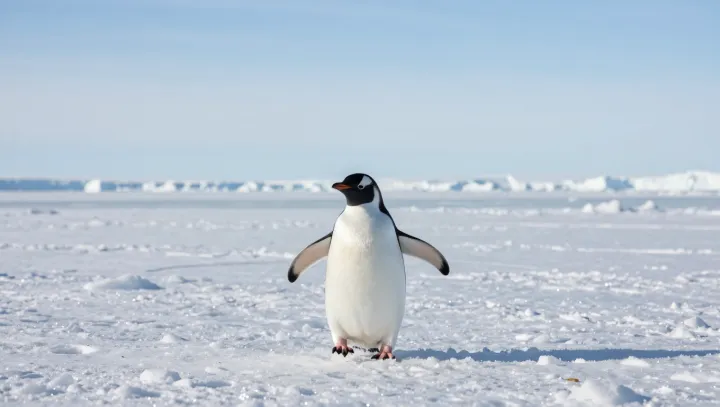
At the cold fringe of a penguin colony, the outsiders stand still. Between dense ranks of breeding pairs and the open ice, unmated birds pack together in loose groups that field biologists dryly call single clubs, an arrangement that looks accidental but follows a quiet social rule.
What these clusters show first is exclusion, not choice. Behavioral studies describe how pair-bonded adults occupy the safest interior zones of the rookery, where egg incubation and chick brooding demand stable access to sheltering bodies and coordinated shifts. Unmated birds, lacking nests or partners, are pushed outward by repeated pecks, charges and vocal displays that establish a spatial hierarchy as rigid as any zoning map.
Yet even here, on the margin, order persists. Single birds huddle to conserve heat through shared boundary layers and reduced convective loss, using the same thermoregulatory physics that governs the main huddle but without its reproductive payoff. Some individuals later recruit mates from this fringe population, but many cycle through seasons without breeding at all, their bodies fully capable while their social position blocks access. The colony’s tight coordination, often praised as a model of cooperation, relies on this quiet sorting of winners and losers at its edge.