
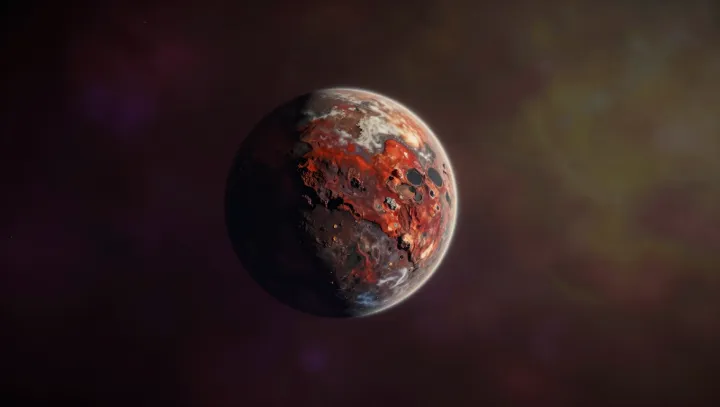
Thick, acidic clouds hold the real drama on Venus, not any imagined alien ruins baked into its crust. In those clouds, tiny imbalances in trace molecules may hint that standard atmospheric chemistry is missing a term, and that missing term could be exotic photochemistry, hidden volcanism, or even metabolism in a zone where temperatures and pressures resemble a high-altitude desert on Earth.
Scientists chase these faint lines in the spectrum because molecules like phosphine and sulfur dioxide act as audit trails, exposing whether equilibrium thermodynamics alone can explain the atmosphere. A claimed phosphine signal set off this race; if confirmed and fully modeled with radiative transfer and kinetics, it would either force a rewrite of Venusian geophysics or open a narrow, testable window for life in droplets of sulfuric acid. Pixelated radar hints of geometric structures, by contrast, carry almost no information content and collapse under higher-resolution imaging.
The surface, though, is the real hardware killer. Venus’s pressure crushes like an ocean trench, while temperatures soften lead and cook conventional electronics in minutes. To survive, engineers need pressure vessels more like deep-sea submersibles, active cooling systems, and high-temperature semiconductors such as silicon carbide that can run without melting their own solder joints. Entry probes must shed hypersonic heat with ablative shields, then keep instruments alive under corrosive carbon dioxide mixed with acid droplets. Only by mastering that brutal environment can a lander ground-truth the spectral puzzles hanging in the clouds above.
So the story is written first in faint spectral lines overhead, and only later in scorched metal resting briefly on rocks that no human hand will ever touch.