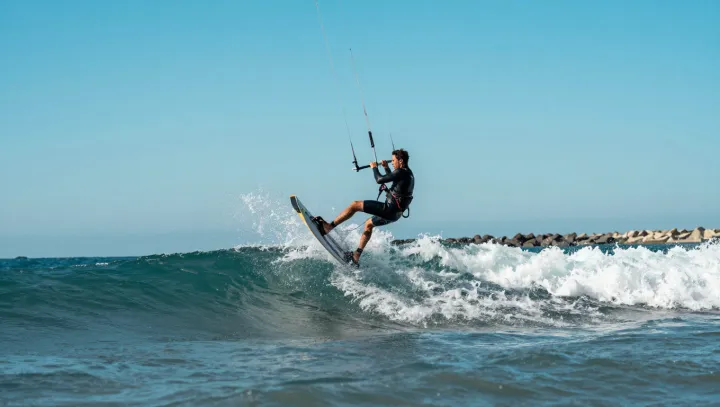
Chop is not a problem for a pro kitesurfer; it is a grid. Each lump of water becomes a data point, aligned with kite angle, board edge, and muscle memory. Where amateurs feel chaos, experts see repeating wave periods, predictable troughs, and narrow launch windows measured in fractions of a second.
The harsh truth is that the rougher it gets, the more information the water provides. A skilled rider locks onto wave frequency and phase, matching board speed to the oncoming peak so that the board meets the face at the steepest instant, while apparent wind spikes through precise kite trim and bar input. That timing, combined with hard heel‑side edging and controlled edge release, converts sideways chop into a vertical ramp, using hydrodynamic lift instead of fighting it.
The real trick is tension. Constant micro‑adjustments keep the kite lines loaded, so when the board hits the short, ugly face of a wave, stored elastic energy in the lines and the rider’s legs unloads in the same heartbeat. By syncing center of mass, line tension, and wave angle, the rider filters out randomness; missed bumps vanish, the selected ramp stands out, and the jump leaves the water looking impossibly clean.