
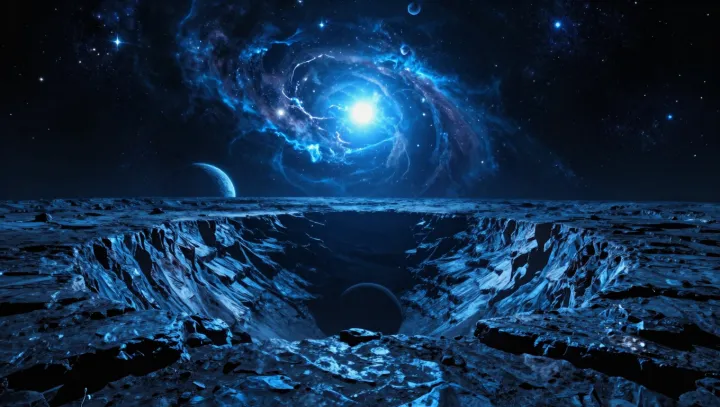
Brighter does not mean kinder. A blue star can pour out tens of thousands of times more ultraviolet energy than the Sun, and that excess is hostile to biology. Intense UV and X‑ray flux strip atmospheres, break molecular bonds, and drive photodissociation in any fragile organic chemistry clinging to nearby worlds.
The real problem sits in the clock. Massive blue stars burn through their hydrogen at such a rate that stellar evolution races ahead of biology; their main‑sequence lifetime can be a tiny fraction of the time it took Earth to progress from simple cells to complex ecosystems. Before slow processes like abiogenesis and Darwinian evolution can iterate, the star swells, sheds mass, or explodes, resetting the local environment in a blast of ionizing radiation and shock waves.
There is another quiet penalty. To orbit far enough away to avoid sterilizing heat, a planet must sit at a distance where orbital periods stretch and climate can swing violently as the star’s luminosity fluctuates. Strong stellar winds, powerful magnetic activity and frequent flares erode any early atmosphere and ionosphere, undermining long‑term climate stability. In the harsh blue glare, chemistry may start, but it rarely gets the luxury of time.