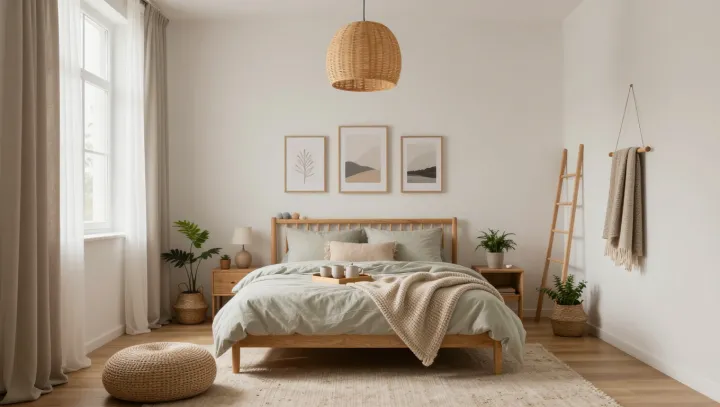
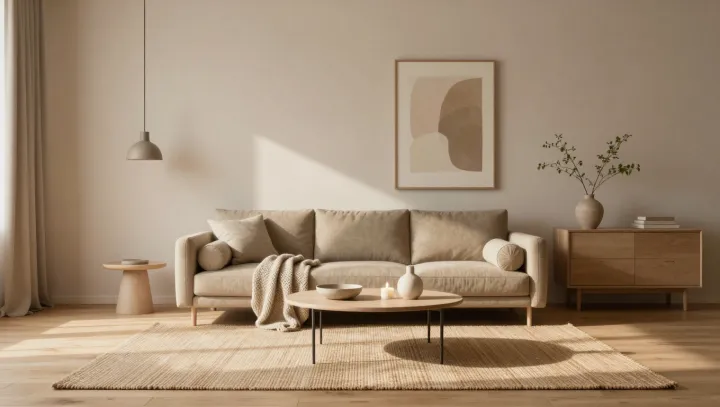
A stripped-back room often feels larger before a single wall moves. Bare surfaces, pale sofa fabric, a quiet rug: the brain reads that scene as easier to process, so it quietly upgrades its estimate of available space.
The bold claim is this: clutter does not just look messy; it taxes cognition like a hidden rent. Every visible object recruits working memory and activates more saccadic eye movements, increasing what cognitive scientists call perceptual load. When shelves, patterns, and decor compete, the visual cortex spends resources on object recognition instead of mapping boundaries, so the room feels busier, not bigger.
Equally counterintuitive is the power of low-contrast neutrals. Soft, neighboring tones reduce edge detection events along walls, furniture, and flooring, which alters how the brain performs figure–ground segregation. With fewer hard boundaries, surfaces appear to flow into one another, extending perceived depth and width. Light, matte neutrals also bounce luminance more evenly, giving the visual system more reliable ambient cues for spatial summation, so a modest living room is encoded as a more continuous volume rather than a set of competing zones.