
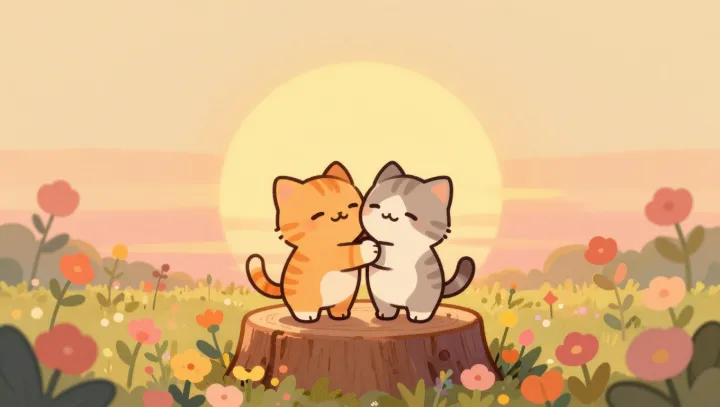
Soft fur pressed together on a sofa looks like strategy. It is not. Two kittens “hug” because a narrow set of neural circuits fires for warmth, safety and oxytocin‑driven bonding, not because any long game is being sketched in the air between their whiskers.
The blunt truth is that comfort is cheap while coordination is expensive. Mammalian touch systems and reward pathways do the first job with minimal computation. By contrast, long‑term teamwork demands prefrontal cortex horsepower for planning, inhibitory control and what cognitive scientists call mental time travel, the ability to simulate future scenarios and hold them in working memory.
Human groups go further and bolt language onto that hardware. With symbolic communication and shared intentionality, individuals can align goals, encode them in contracts or rituals, and keep them stable through social norms and punishment. Social insects show another path, using genetic programming and pheromone signaling, but even their colonies lack explicit representation of multi‑step plans the way a project charter or budget does.
So the kittens stay where evolution left them. Their hug closes a loop of body heat and short‑range safety signals. It never upgrades into division of labor, role specialization or institutional memory, because those require abstract representations that a small carnivore brain does not store, and a vocabulary it does not speak.