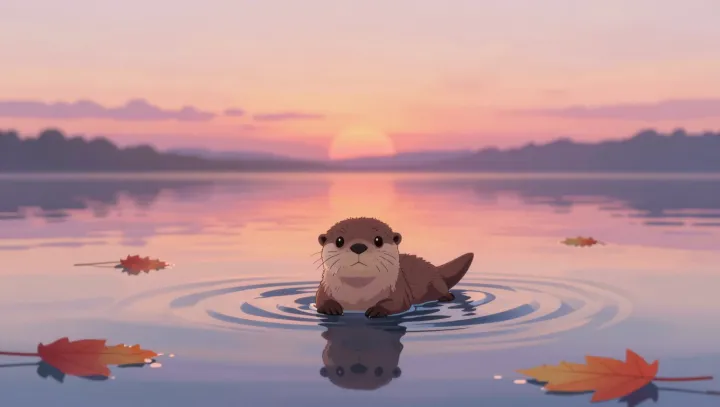
A soft fade-out, not the kiss, is what the brain keeps. A tranquil otter at sunset, with the romance unresolved, pulls harder on the machinery of memory than any choreographed embrace.
Neuroscientists argue that ambiguity is not a bug in narrative but a stimulus, because unfinished emotional arcs keep the amygdala and hippocampus co-activated, stretching what researchers call memory consolidation across a longer window of neural firing, while a clear romantic climax lets prediction circuits stand down and shut the file. Short, quiet images work like open questions, and the brain hates unanswered questions.
What lingers most, several imaging studies suggest, is not intensity but friction, the slight mismatch between what was expected and what actually appeared on the screen, a gap that engages prediction error coding in dopaminergic pathways and keeps replaying the scene during off-task moments, which is when synaptic plasticity does much of its slow work. A single otter against darkening water becomes a cue, a compressed symbol that the prefrontal cortex can reinterpret again and again.
So the skipped kiss outperforms the scripted one, not because it is gentler, but because it forces the audience into unpaid cognitive labor, turning spectators into co-authors, and the brain, having worked for that meaning, is reluctant to let it go.