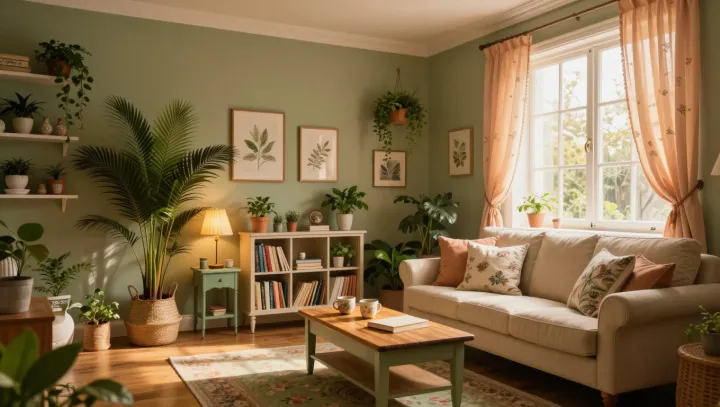
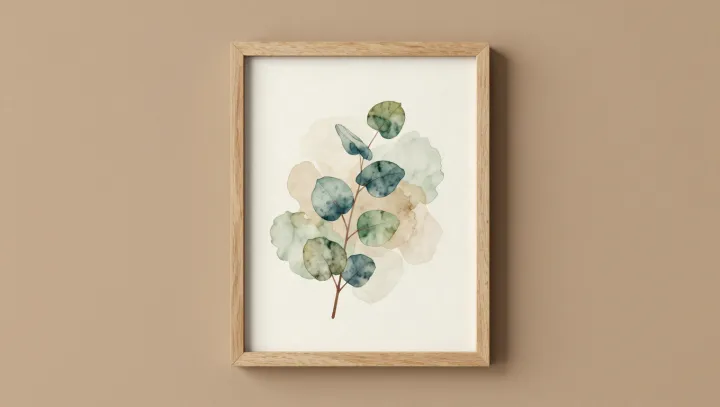
A washed olive leaf, barely darker than the wall behind it, does more than decorate an empty corner: it gives the eye a low-stakes place to land, a visual pause amid furniture, screens, and hard edges. The effect is not mystical. It is perceptual triage.
The relief is real. In attentional restoration theory, settings that hold attention softly rather than seize it can let directed attention recover; a pale wash, with low chromatic saturation and limited visual complexity, offers interest without forcing the brain to sort competing signals. Soft color asks less. It lowers cognitive load not by erasing stimulation, but by making the stimulus easy to predict, leaving fewer perceptual loose ends tugging at awareness. This is a small intervention. It changes the hierarchy of attention, not the furniture, because the visual system reads contrast, edges, and color before conscious taste supplies a story.
Watercolor has an unfair advantage. Its translucent edges imply variation without declaring a demand, while botanical forms arrive preclassified by memory as familiar, slow, and nonurgent; even a small cluster can interrupt the visual authority of rectangles, glossy surfaces, and electronic glare, especially where a room otherwise offers no resting point. The room stays itself. Yet the gaze acquires a gentler route through it, avoiding neither disorder nor daily use, and that modest rerouting can alter the felt temperature of an ordinary afternoon. A leaf remains still; the mind, briefly, does not have to.