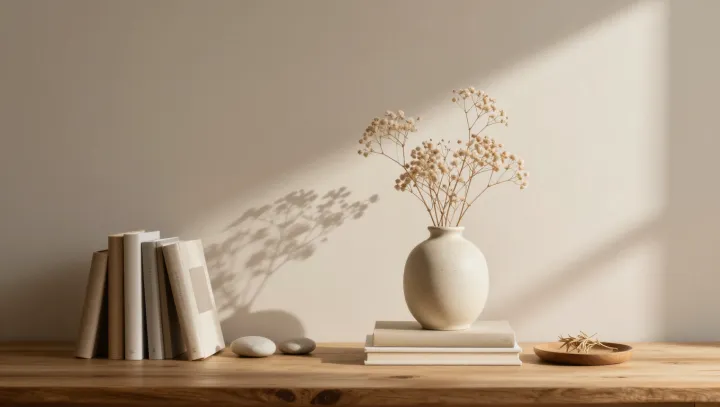
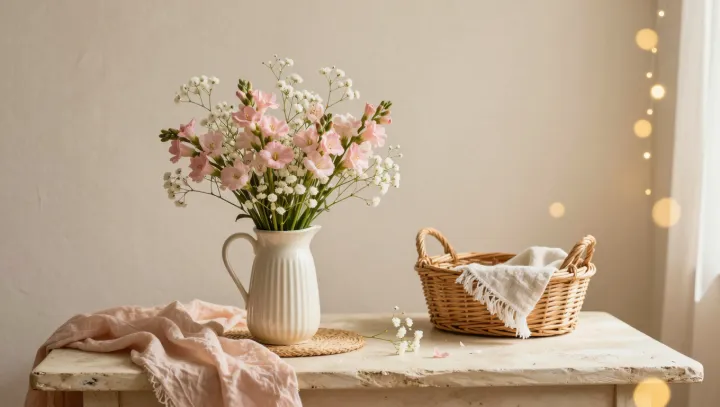
The cream pitcher wins first. Its rounded body catches a strip of window light, while three short stems interrupt the blank cloth without claiming it. You notice the gaps. That is the point. A crowded table announces abundance; this one offers permission, because the eye can settle before conversation asks anything of it.
Less is not sterile here. Environmental psychologists describe the strain as attentional load: every glass, plate, sleeve, and screen competes for selection. Visual clutter increases cognitive load, and a tightly packed place setting can make friendly company feel like work. You do not count the objects. Your nervous system does. Small flowers become a soft focal point, giving your gaze somewhere to land, pause, and return. That pause can make welcome feel physical.
Warmth is often a spacing problem. A single pitcher suggests sharing without issuing orders; it is an affordance, an object that quietly proposes an action. It feels generous. The empty area around it matters as much as the vessel itself. In proxemics, distance affects whether contact feels invited or imposed, and a similar rule applies to plates, elbows, serving dishes, and eye-lines. Keep one useful vessel. Cut visual noise. Let the flowers do less. Would you rather arrive at a feast, or at a table that has saved you a seat?