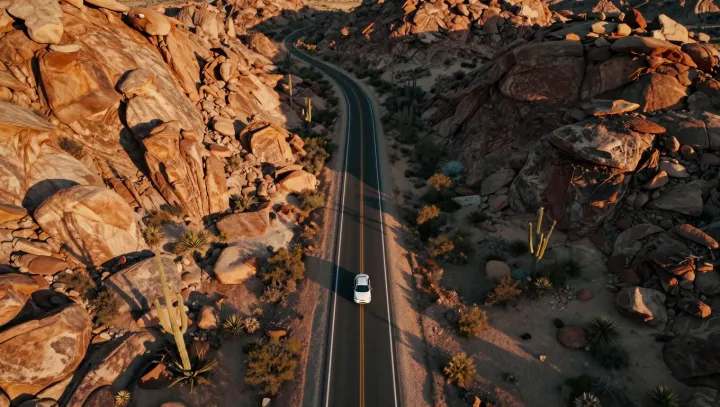
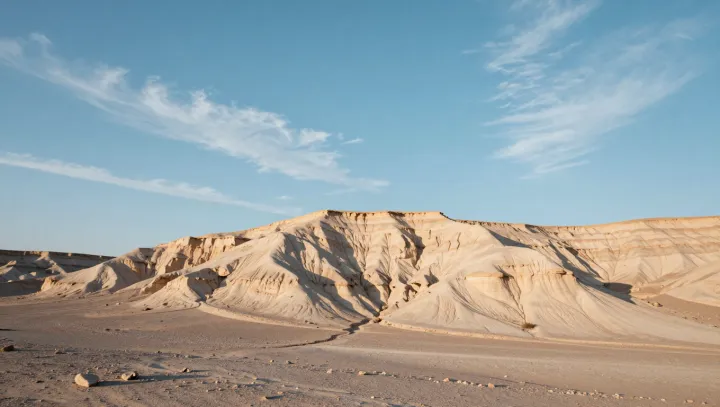
Sunlit cliff grains scatter. Though a gust may carry them across bare ground, most were set loose earlier, when thermal expansion pried mineral boundaries apart, water entered fractures, and chemical weathering weakened rock from within. The wind arrives late. By then, it is chiefly a transporter, removing particles that heat, water, and reactions have already detached.
Heat begins the work. Under severe daily temperature swings, minerals expand at different rates; repeated thermal stress opens microfractures along crystal contacts, turning a coherent wall into material ready to fail. Water is no spectator. Rare rain can infiltrate those cracks, and when temperatures permit freezing, ice expansion exerts pressure; even without ice, wetting and drying cycles help widen fissures. Chemistry finishes the setup. Hydrolysis alters susceptible minerals, while oxidation changes iron-bearing compounds, weakening bonds and producing grains that gravity or runoff can dislodge.
Wind carries the debris. Once fragments lie exposed, aeolian transport can sweep finer particles away and abrasion can scour surfaces, but neither process explains why the fragments existed in the first place. That distinction changes everything. Call a desert cliff wind-carved and the hidden sequence disappears: rock first loses cohesion through weathering, then wind edits the residue, grain by grain. Yet the face remains. At dusk, its shadows mark not a single force, but a patient argument between stone and decay.