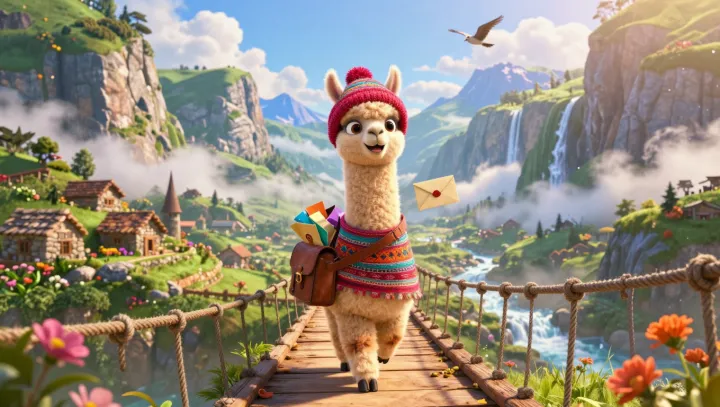
Rope fibers twitch above a gorge, and a llama stops because the crossing asks for a kind of balance that its body was not built to gamble on. That is no failure. You would hesitate too. A narrow, swaying deck shifts under each step, while a pack raises the animal's center of mass and magnifies the cost of a slip.
The supposed contradiction is mostly a bad question. Llamas won mountain transport jobs because they turn sparse forage into freight and tolerate thin air better than imported draft stock, not because they are universal bridge machines. You use the tool that fits most of the route. Their split upper lip lets them crop tough plants; their padded feet supply traction on rock and reduce ground pressure on fragile paths. A llama can carry a meaningful load over long, steep distances with no wagon road, fuel, or feed convoy following behind. That matters more.
Bridge crossings were the exception, and exceptions expose limits. You do not ask an animal with a broad body and a cautious prey response to trust a vibrating ribbon that may be narrower than its comfortable footing. Suspension dynamics can amplify lateral motion; a loaded pack can alter load distribution and balance. Communities could choose wider crossings, unload cargo, lead animals singly, or move goods by people where the span made animal passage reckless. The bargain was practical, not heroic. If llamas saved labor on the long climb, would you reject them because one bridge demanded another plan?