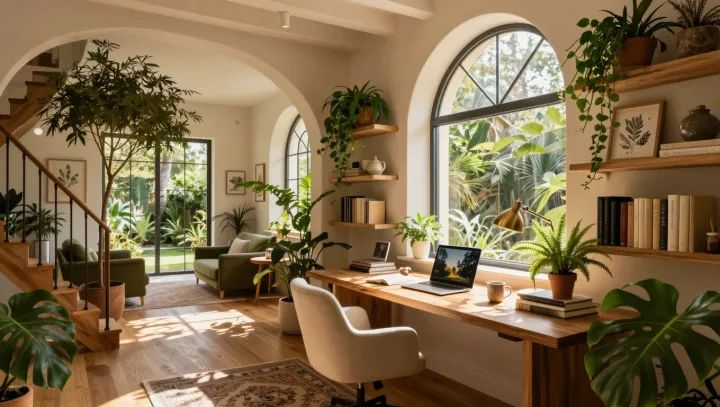
Sunlight catches on a leaf, and the familiar claim begins to wobble: photosynthesis in houseplants does not manufacture enough oxygen to transform an ordinary room. The arithmetic is stubborn. In occupied spaces, ventilation and outdoor air exchange govern oxygen levels far more than a few pots can. Yet the leaf may still alter the room that matters most: the one inside the skull.
That distinction is more than a botanical correction; it separates indoor folklore from a quieter, better supported effect. The brain notices. Studies of views containing vegetation have linked such exposure with recovery of directed attention and lower markers of stress, even when no walk through a park occurs. Attention restoration theory holds that softly absorbing natural patterns give effortful focus a pause, while shifts in the autonomic nervous system may temper sympathetic arousal. Results differ by setting and method. The signal is not magic.
The real bargain is modest, which makes it persuasive. A plant on a desk will not replace fresh air, clinical care, sleep, or a well-designed building. It can, however, interrupt the hard visual geometry of screens, walls, and tasks. This is no cure. What it offers is a small recess for perception: a moving shadow, a branching line, a reminder that efficiency need not consume every inch of the room. At the window, green becomes less a machine for oxygen than an argument for attention.