
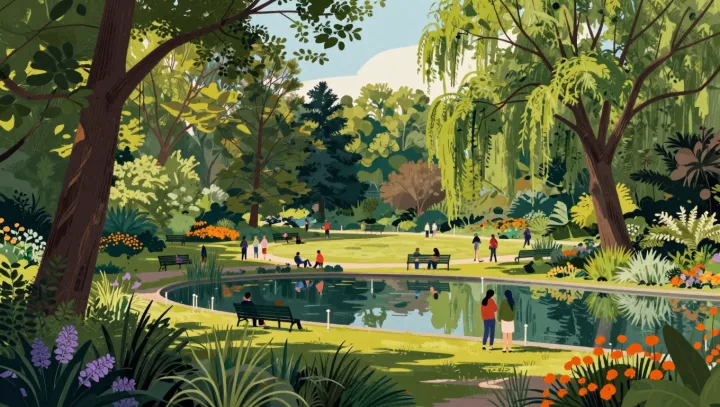
Park walks reset attention. When leaves, birds, paths, and shifting light draw notice without imposing a task, directed attention can loosen after hours spent suppressing distraction and selecting targets. That relief is real. Attention restoration theory separates effortful executive control from involuntary attention, which holds the mind lightly instead of fastening it to a deadline.
It needs no ritual. A stroll works best when the route offers enough variation to catch the eye, yet not so much demand that it becomes another assignment. Cognitive fatigue accumulates. Sustained executive control recruits prefrontal networks, and its metabolic demand can leave concentration brittle when alerts, meetings, and screens keep asking the brain to choose. The park changes inputs. Low-stakes stimuli invite soft fascination, a term in attention restoration research for interest that engages perception while asking little deliberate control. That is the trick. Think of a computer background process: neural metabolism continues, yet the filtering load can ease, leaving mood less exposed to rumination.
Small breaks can compound. If city planners and employers treat nearby green space as cognitive infrastructure rather than decorative surplus, a short walk could become a low-cost buffer against attention drain. That is no retreat. Connected parks, quiet routes, and alert-free intervals could turn mental recovery into a built feature of daily life, where the brain spends fewer hours operating at maximum filter. Convenience is decisive. Access matters because restoration is unlikely to become habit when a patch of green requires a long trip, a fee, or another appointment placed inside an already crowded day.