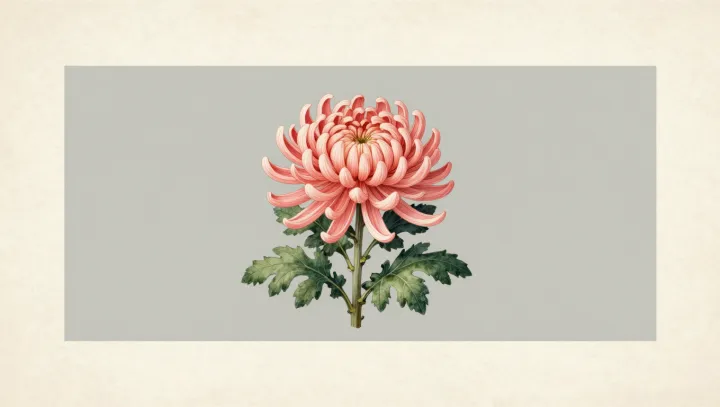
What looks like gardening fashion is really genomic engineering by patience. The chrysanthemum, a wild aster once confined to modest yellow rays in East Asian fields, has been turned by breeders into a genetic playground where petal form, hue and bloom time can be tuned almost at will.
At the center of this shift is excess, not refinement. Wild Chrysanthemum indicum carried a simple chromosomal setup, but cultivated chrysanthemums are often polyploid, packing multiple chromosome sets into each nucleus, which multiplies gene copies for pigments, floral symmetry and inflorescence size. That genomic surplus, combined with repeated interspecific hybridization across several aster relatives, created what geneticists call a hybrid swarm, a messy but powerful reservoir of alleles ready to be recombined in nurseries and research plots.
The modern florist’s chrysanthemum is less a single species than a living archive of those recombinations. Breeders exploit quantitative trait loci that control carotenoid and anthocyanin biosynthesis, stacking variants that shift flowers from original yellow into whites, purples, bicolors and even green tones. By selecting mutations in meristem identity genes, they stretch or fold the classic daisy shape into pompoms, spiders and anemone forms. Marker-assisted selection now tightens this craft, allowing targeted crosses that compress into a few cycles what once took lifetimes of trial and error, turning a former roadside flower into something closer to a biological paintbox for horticulture.