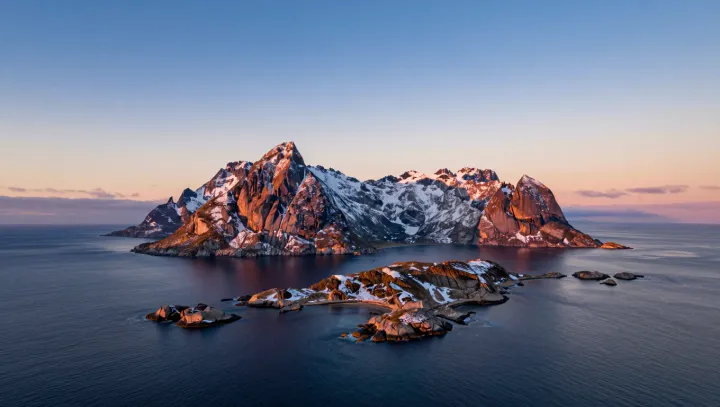
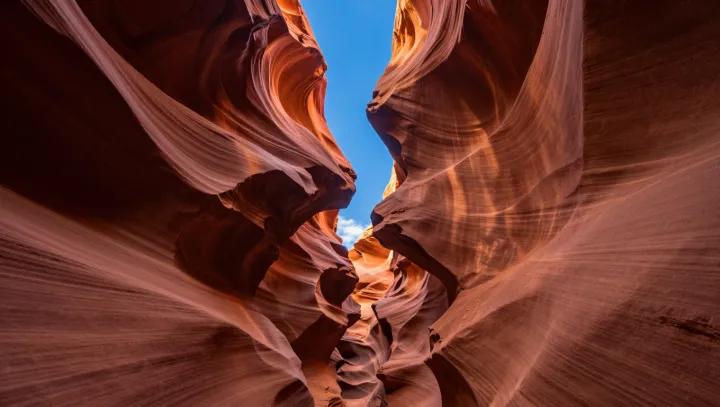
Bare rock, not chisels, usually writes the smoothest stories on a cliff. A glacier does the heavy work, its ice packed with debris that acts as a moving belt of sandpaper while basal sliding drags stones across bedrock under high confining pressure, burnishing one face of a valley wall to a glossy sheen.
More underrated is the way air can sand stone. Wind abrasion, driven by suspended quartz grains, pounds the same height band on a wall, and over countless impacts the roughness length drops until the surface feels almost polished, even though the process is nothing more than repeated mechanical weathering by particles in motion.
Yet the most deceptive polisher hides inside the rock itself. Groundwater percolating along fractures carries dissolved ions and fine sediment; as laminar flow accelerates through narrow joints, it both chemically weathers minerals through solution and physically scours them, so micro-peaks dissolve or flake away and the fracture wall closes into a slick, silk-like plane.