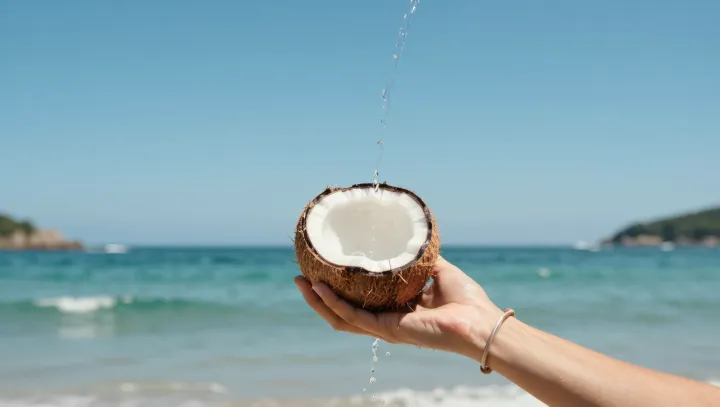
That clear bottle is not innocent. Once the seal is broken, coconut water stops being a packaged drink and starts behaving like a nutrient broth, even if it still smells fresh and tastes pleasantly sweet.
The harsh truth is that appearance is a terrible safety signal here. Coconut water is rich in simple sugars, amino acids, and minerals, which means bacteria and fungi treat it like a growth medium comparable to laboratory culture media used for microbial incubation. Its pH sits in a mildly acidic zone, not low enough to inactivate many species such as certain strains of Escherichia coli or Salmonella, yet comfortable for rapid cell division when even a few cells enter from air, lips, or a reused cap.
The more unsettling point is that spoilage cues arrive late. Many pathogenic microbes do not initially produce strong off-odors, pigments, or visible turbidity, especially under refrigeration, where psychrotrophic organisms can multiply slowly yet steadily without dramatic visual change. Cold slows metabolic rate but does not guarantee microbial death, so populations can climb from a few cells to dangerous loads long before gas bubbles, cloudiness, or sour aromas appear. By the time the drink finally tastes wrong, the microbial bloom has already done its quiet work.