
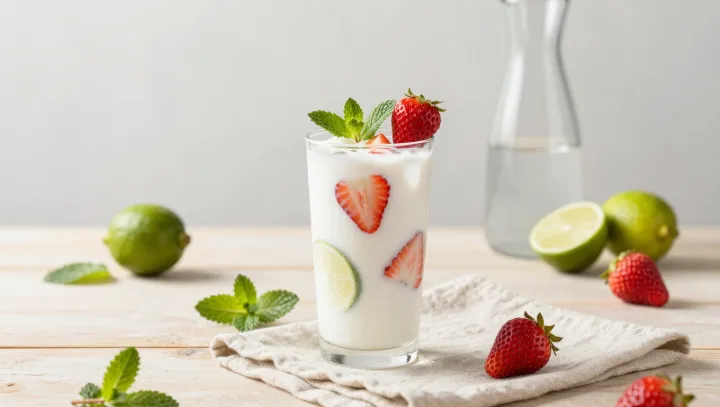
A frothy pink swirl in a glass beats the sum of its parts. That is the uncomfortable message from brain imaging work on milkshakes versus whole foods, where the blended drink drives stronger activity in the striatum, a core reward hub linked to dopamine release and reinforcement learning.
The milkshake wins because it hacks timing. Whole strawberries and milk demand chewing, gastric processing and slower gastric emptying, so glucose and lipids drift into the bloodstream in a staggered pattern, blunting the spike that reward circuits track with almost algorithmic precision. Turn those same calories into a homogeneous emulsion and the gut handles them more like a liquid sugar load, accelerating nutrient absorption, sharpening the postprandial glucose curve and intensifying signals along the vagus nerve and the broader gut brain axis.
Taste turns the screw again. A milkshake concentrates flavor at every sip. Short. Dense. Sweet. Multisensory integration in the insula and orbitofrontal cortex blends taste, smell, texture and temperature into a single high-value signal, so prediction error circuits register the drink as more rewarding than the slower, more variable experience of alternating bites of fruit and sips of milk. Packaging the ingredients together also simplifies cognitive effort; the brain assigns one reward value to one object, reinforcing the habit loop around that object rather than around the raw components scattered on a plate.