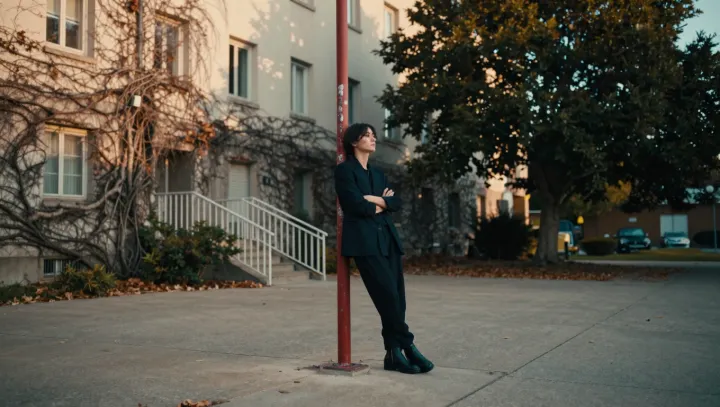
An all‑black outfit looks like armor. Not because it shines. Because it refuses to. Black textiles absorb most incident light through higher optical density and lower reflectance, turning the body into a single, continuous value block against a brighter background.
Power, in this case, is a visual negotiation with the brain’s edge detection system and figure‑ground segregation. When clothing sits in one compressed luminance band, the eye stops wasting processing power on color variation and surface gloss, so contours, posture and silhouette jump forward as the primary data stream. The wearer appears cleaner, straighter, more intentional, even if the cut is ordinary, as the absence of internal contrast erases micro‑wrinkles and seams from casual notice.
Sharpness arrives from this same austerity. Human perception weights high‑contrast borders more than internal texture, a principle used in image compression and contrast‑limited adaptive histogram equalization. Against walls, streets and screens that reflect more light, a black figure becomes the darkest element in the frame, so the outline reads like a graphic icon. Less reflected light means fewer visual distractions, which translates into perceived control: the person seems to command the scene, not compete with it.