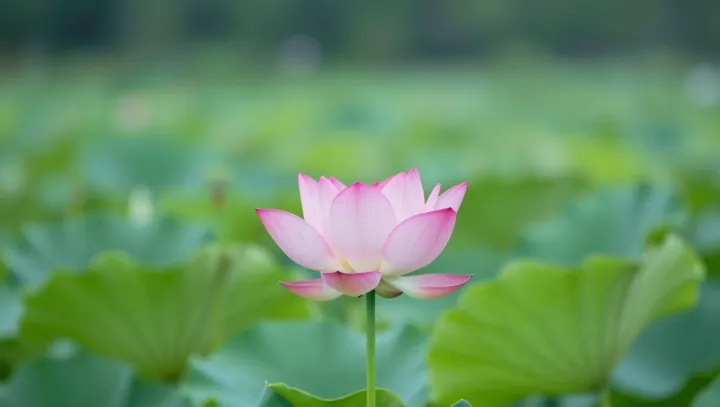
Lotus looks like a summer plant, yet its calendar runs ahead of the heat. Cool water, not warm air, sets up its strongest surge. In containers and ponds, rhizomes wake as day length stretches and soil is still cold to the touch.
The blunt truth is that lotus behaves more like a temperate crop than a beach ornament. Inside each rhizome, starch accumulation, meristem activation and root primordia formation all begin under low water temperatures, while evaporative demand and algal competition are still minimal, so early potting lets the plant convert stored carbohydrate reserves into dense feeder roots instead of emergency leaf repair. Delay until the water feels pleasant and the plant wastes weeks rebuilding desiccated tips and fighting microbial rot in anaerobic pockets that formed in neglected, warming soil.
Growers who start in the cool season also exploit physics. Dense, cool water carries more dissolved oxygen, stabilizing aerobic respiration around young root hairs, and the shallow containers many hobbyists use stratify quickly once the sun climbs, stressing late-planted rhizomes with sudden thermal shocks between surface and pot base. Early planting smooths those gradients, so by the time air screams summer, the plant has already closed its own canopy, shaded the water surface and built a self-made microclimate that looks effortless but was engineered months earlier in the cold.