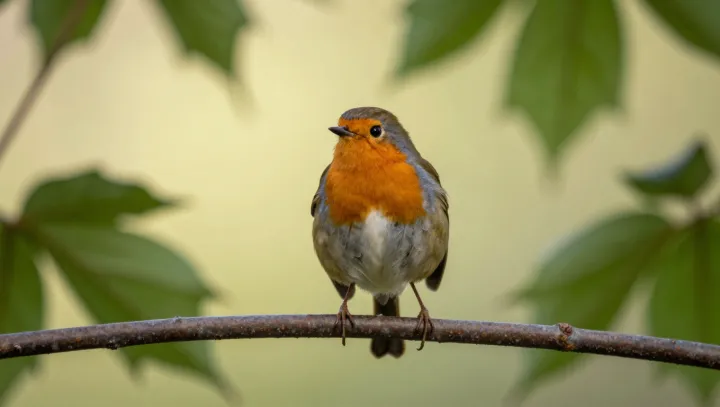
Smallness, not grandeur, has made the robin Britain’s unofficial emotional standard. The bird’s round body and blunt posture sit on spades, gravestones and washing lines, placing it inside domestic life rather than above it, which turns a routine passerine into a constant, almost intrusive, witness of private moments.
Sentiment, not plumage, built its authority. Victorian mourning cards and winter illustrations fixed the robin beside snow and graves, while carols and children’s books cast it as messenger and mourner, so repetition in visual culture worked like cultural imprinting in ethology, binding the bird to ideas of loss, kindness and seasonal endurance.
Aggression, paradoxically, sealed its charm. Ornithologists describe the robin as strongly territorial, attacking rivals with a force that contradicts its gift-card softness, and that tension between apparent fragility and real combativeness mirrors a national self-image that prizes quiet resilience over spectacle, which is why larger raptors could not dislodge it in a public vote.