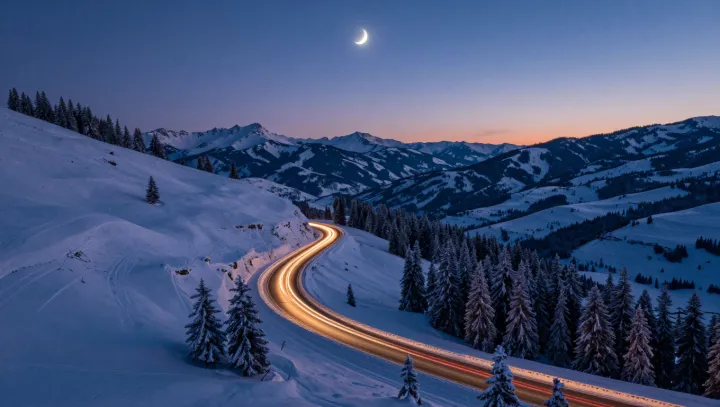
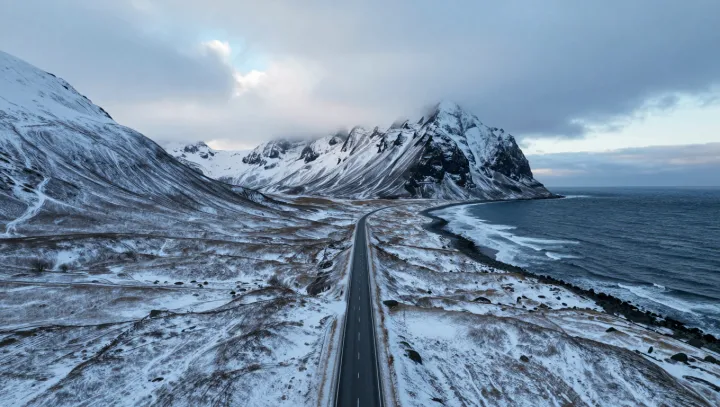
Fragility is not a failure here. It is policy. Coastal roads in frozen storm belts exist because no inland line can match their direct access to ports, fish plants, and small towns pinned between cliffs and surf.
Engineers treat each road as a controlled experiment in damage. They run cost–benefit models, compare detours over mountain passes, factor in avalanche paths and rockfall frequency, then accept that sections will be rebuilt. Design codes for coastal highways assume partial loss. They price that loss in advance.
Paradoxically, survival starts with flexibility. Instead of rigid concrete slabs, designers specify flexible pavement structures with thick asphalt layers over granular subbase, so wave‑shaken ground can deform without cracking the surface at once. Under that, geotextile and geogrid layers spread loads over thaw‑softened soils and slow rutting where permafrost once kept the ground locked.
The sea is treated as a blunt machine. Engineers calculate significant wave height and run hydraulic modelling to size rock armor, toe berms, and recurved sea walls that throw spray back offshore. Many structures are sacrificial. Rubble mounds are built to fail in storms, absorbing energy so the road embankment behind them does not.
Mountains get similar triage. Rock mass rating, joint spacing, and freeze–thaw cycles dictate whether crews bolt slopes, cast shotcrete, or hang steel catch fences above the carriageway. Debris basins and deflection berms redirect avalanches and slides around the road rather than trying to stop the full load head‑on.