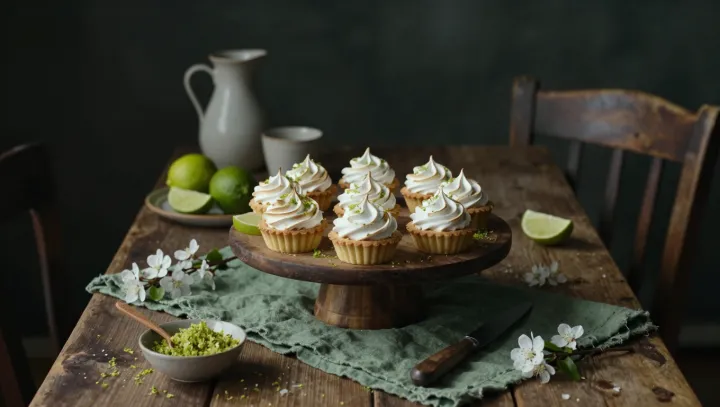
The shock is this: identical sugar, unequal sweetness. One tartlet wears a pale, barely set meringue; the other carries a deeply bronzed cap and a brighter hit of lime zest. On paper, they match in sucrose grams. On the tongue, they split like different recipes.
The darker crown wins the mind first. Color bias, documented in sensory psychology, primes the brain to expect caramel and depth, so perceived sweetness rises before any sucrose reaches taste receptors. Browning also triggers the Maillard reaction and caramelization, generating volatile aldehydes and pyrazines that flood the retronasal olfactory system with toffee-like signals, which the brain casually files under “sweeter” even when a refractometer would report no change.
Yet the extra lime zest pulls hard in the opposite direction. By boosting citral and limonene, it sharpens both acidity perception and trigeminal stimulation, the neural circuitry that flags sting and bite. That heightened tang suppresses sweetness via mixture suppression, a well-documented psychophysical effect where sour and bitter cues dampen sweet intensity. So two tartlets, chemically similar in sugar concentration, end up tasting wildly different because color, aroma compounds, and multisensory integration quietly rewrite the sweetness ledger in the brain.